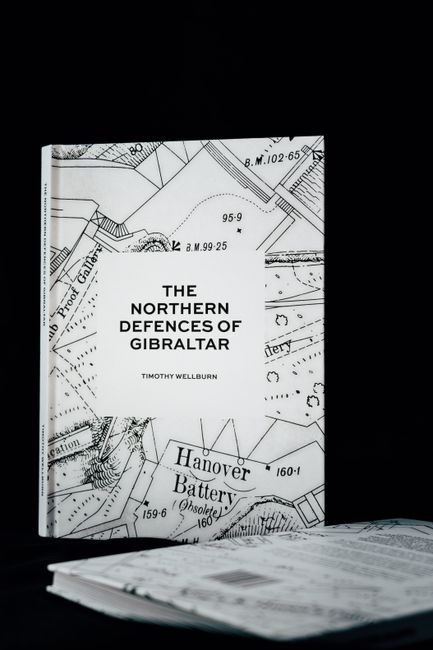



Book Review: The Northern Defences of Gibraltar by Timothy Wellburn
In military history, there are countless examples of how landscape and geography helped or hindered invaders. While the open plains of the Soviet Union were rapidly conquered by the Wehrmacht in 1941, the English Channel has acted as a moat-like defence for Great Britain, with the last successful invasion taking place in 1688. Gibraltar is also blessed by geography in this sense: we are surrounded by water on three sides and only accessible by land via the thin strip of the isthmus which can be defended from vantage points on and near the north face of the Rock. To borrow the title of Ian Morris’s 2022 book about Britain and its relationship with Europe and the wider world: geography is destiny.
Of course, a merely geographical advantage is nothing if it isn’t exploited and that’s where the Northern Defences came in: a network of military fortifications, tunnels and chambers that follow the natural features of the cliffs and promontories that are located between the Castle walls and the cliffs overlooking Devil’s Tower Road. They were, for centuries, through sieges and changes of sovereignty, Gibraltar’s first line of defence—the impregnability, since 1704, of fortress Gibraltar is largely due to the impregnability of the Northern Defences.
However, since the end of World War II, and the resulting changes in military threats and tactics, the defences fell into a state of dilapidation. Referred to colloquially as ‘el jungle’, the area became a magnet for rubbish, graffiti and dog mess and it was only when the current administration invested in an extensive clean up and restoration campaign that it has now been granted a new lease of life as a tourist and heritage attraction. The publication of ‘The Northern Defences’ by the historian Timothy Wellburn is therefore most welcome at a time when tourists and locals can safely explore the Defences’ warren of tunnels and defensive buildings.
The Deputy Chief Minister, Dr Joseph Garcia, says, in his preface to the book, that the Northern Defences constitute “one of the most remarkable defensive systems in Europe” and argues that it is a site which, thanks to its rehabilitation, can now assume a “global significance”. Dr Garcia links the Northern Defences to the wider story of Gibraltar and its people, writing that it is “the story of a community that has endured by adapting, surviving, and reinventing itself,” just like the fortifications themselves have over the centuries.
Wellburn’s preface notes that the Northern Defences were significantly strengthened and extended by the three sieges endured during the 18th century. Wellburn says the book is based on a decade of visits to the site and is the fruit of research at the Royal Engineers’ Museum, the British Library and at Gibraltar institutions like the National Archives, the Garrison Library and the Museum. He notes the important work by Project Director Carl Viagas in transforming the no-go area of el jungle into what is possibly Gibraltar’s most exciting tourist site today.
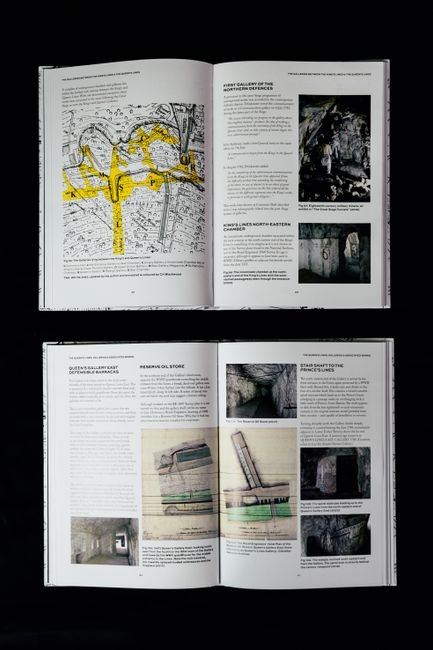
The book is a lavishly produced hardback with over 190 photographs of the Defences in their current state and many reproductions of historical maps and blueprints. It is a thorough and meticulously researched work that will for a long time be the benchmark against which future research is judged. There is also a helpful glossary of fortification terms at the end of the book to support the lay reader’s comprehension.
Although a bit heavy and cumbersome to carry up there for a trek, it could also serve as a highly instructive guidebook for visitors as it makes sense of the many features whose use will not be evident to the uninitiated. The book helps us navigate what the author calls the “confusing accretion of different periods of construction.” One example is the narrow channel which can be accessed from Orillon Battery—it might easily be overlooked without this guide which identifies it as a ‘murder hole’ which would be used by defenders to shoot at or pour harmful substances on approaching attackers.
Wellburn starts off by setting the Defences in their historical context. As in many sites across the Rock, history is a tale of superimposed layers: the British works to expand and fortify the lines which give the Defences their current aspect were built on pre-existing Spanish defences which, themselves, were adaptations of Moorish fortifications. Each major siege brought with it improvements after weak or inconvenient spots had been noted once the heat of battle had abated. Additions continued until the advent of World War II with concrete pillboxes, blast protection walls and, most surprisingly, the brilliantly preserved coloured ranging diagrams adding the most recent layer to this palimpsest.
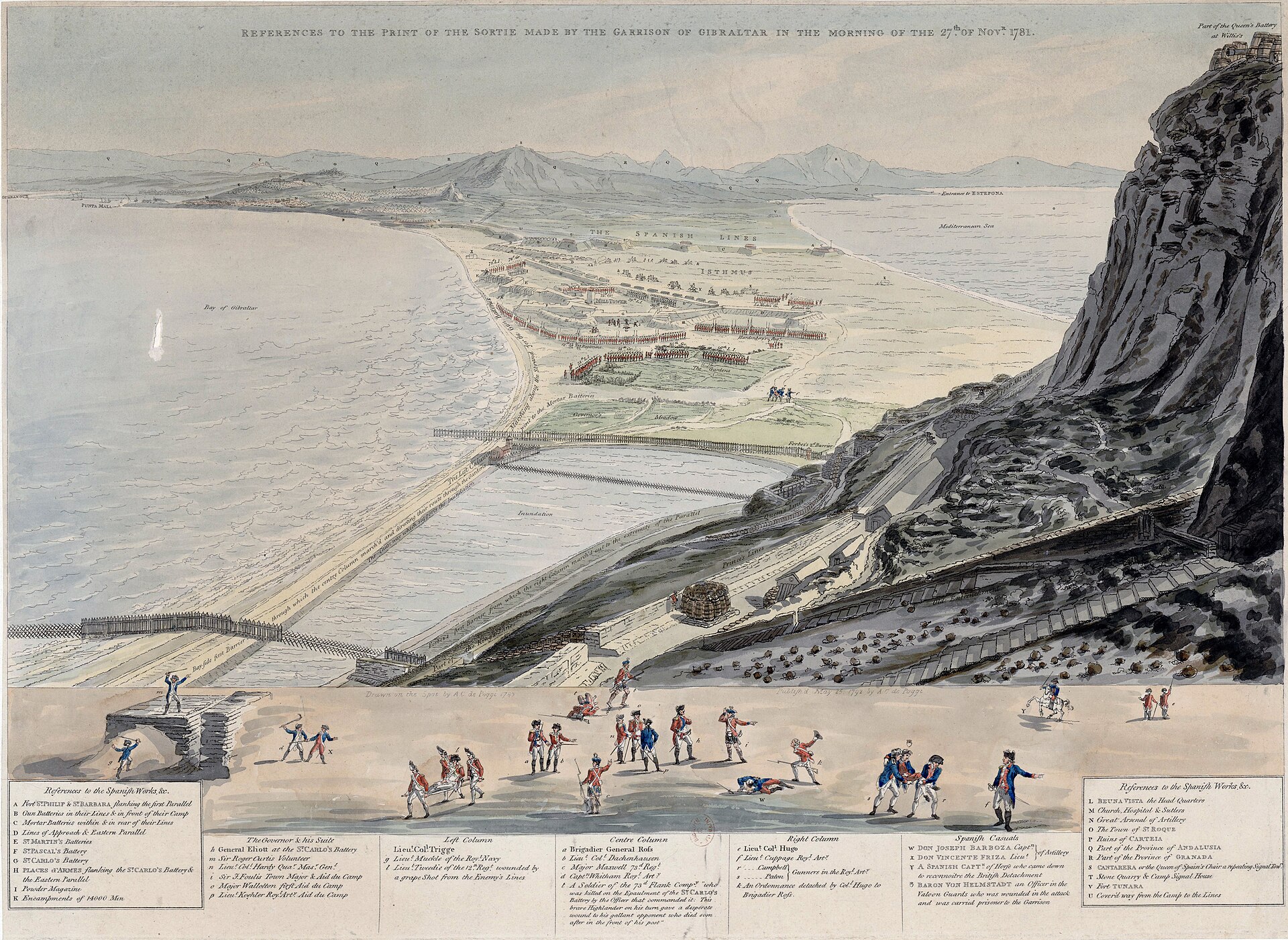
Although today, with buildings and reclamation, it is harder to appreciate, the Defences controlled what was a thin and exposed strip which was effectively the only land access from the Spanish mainland to the city of Gibraltar—where today’s Laguna Estate is, there was an inundation / small lake that made any land invasion perilous.
Wellburn also details the exchanges—and disagreements—between engineers, military personnel and governors who suggested different alterations to the fortifications. One typical problem that those in charge faced was that any expansion, while increasing the filed of fire, would also leave soldiers exposed and vulnerable. From the late 1780s onwards, the Defences underwent a huge expansion with an “extensive network of underground galleries” built together with communication paths between the lines. Many of these chambers, some of which were carved out of natural caves, were used to shelter or accommodate troops manning the lines. We can only imagine what life must have been like for soldiers stationed here: dark, cramped and damp.
Although the history of military fortifications can often seem depopulated—all old walls and silent chambers—the reality is that people lived and died here, laughed and cried, were maimed and found their version of glory while fighting to defend Gibraltar. The shocking graffiti reproduced here, dating from 1793 and showing a pair of gallows and a hanged man, remind us that death was ever-present and that these walls still speak vividly to us today.
The book presents all the facets of the Northern Defences: on the same page we encounter the crude Victorian era iron doors repurposed as a roof for a rifle gallery and the elegant flight of steps that snake up the Entrenchment Wall at Prince’s Lines. It shows how the defences are the result of ingenuity and improvisation, of skill and spontaneity. Packed with detail and insight, this volume is an indispensable guide to this heritage site as it emerges from decades of neglect.
The book is published by Fortress Attractions with typesetting, layout and design by The Bulb Creative Agency. It is on sale at The Gibraltar Heritage Trust shop on John Mackintosh Square.