


Getting Into Culture: Philosophy
We continue our new series where we ask artists, poets, novelists, musicians, dancers and others for tips to help beginners appreciate and learn more about their art form or intellectual interest.
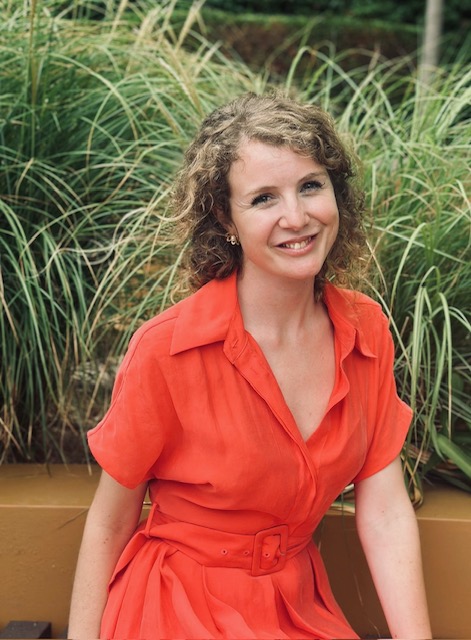
Today we speak to Tessa Rosado-Standen about philosophy. Tessa is an English teacher who studied philosophy at the University of Cambridge. She is also a poet who has featured on GBC and at literary events in Gibraltar.
YGTV: What exactly is philosophy?
Tessa Rosado-Standen: The word ‘Philosophy’ comes from the Ancient Greek word ‘philosophia’, meaning ‘love of wisdom’. Philosophy really is just that: a curiosity to understand the world in which we live. As a ‘subject’ this curiosity is crystallised as a formal, rational study of those big questions about our existence (metaphysics), knowledge (epistemology), values (ethics) and reason. At its core, it is asking those big questions and reasoning them through.
YGTV: Philosophy has a reputation for being abstract and difficult. Is it? How can people approaching philosophy for the first time make their journey easier?
Tessa Rosado-Standen: As with everything, Philosophy has its layers: some simpler and others infinitely complex. Yet Philosophy isn’t, and shouldn’t be thought of, as something inherently overly difficult and inaccessible. I think you simply have to erase the fear of Philosophy as something unsurmountable and grandiose, and strip it back to its essence: the love of wisdom. I am sure we have all found ourselves wondering why we are here, how we got here, what the meaning of all this is. Indeed, those questions are dizzying, and answers evade us and slip through our fingers - they are not tangible or measurable in the way the Natural Sciences are. So, we have to change our approach and see Philosophy as a way of thinking, of the journey itself rather than the destination of a fixed answer. Like with anything, the more you flex the muscle of philosophical thought, the stronger it becomes, you just have to take the first step.
YGTV: How did you first get interested in philosophy and why did you opt to study it at university?
Tessa Rosado-Standen: It was my Religious Studies (Philosophy and Ethics) teacher at A Level who inspired me. I had not intended to take Religious Studies as an A Level, but a last minute decision led me to that class, where after the first lesson, my teacher approached me and told me I had a natural flair for the subject. I had, in truth, always wanted to study English Literature and Language, my first love, but it is incredible what some encouragement can do - I ended up convinced that Philosophy would equip me with broad and deep skills to go on to do anything, and that I would encounter, and more profoundly appreciate, the Literature I loved along the way too. He was right: I became a fledgling philosopher who, using those skills and insights along an unconventional career path, morphed from English teacher to lawyer, back into an English teacher!
YGTV: Are there any introductory books or classic works you can recommend that would be accessibly to beginners?
Tessa Rosado-Standen: The market is full of great resources these days; you’re spoilt for choice! I, personally, would recommend starting with a simple guide to the history of Philosophy. Nigel Warburton’s ‘A History of Philosophy’ is a good place to start as a simple, broad overview to whet your appetite and orientate you in the wide world of Philosophy! If you’re anything like me, (I confess!) and prefer fiction to non-fiction reading, ‘Sophie’s World’ by Jostein Gaarder is a wonderful, gripping novel which weaves the history of Western Philosophy into a beautiful story. Then, to get you familiar with ‘philosophical think’ I would try Thomas Nagel’s ‘What does it all Mean?’. However, if there was just one classic to start with, I would say it has to be Plato’s ‘The Republic’ read alongside some commentary to break down the big ideas.
I’d also suggest listening to the podcast ‘Philosopize This!’ from Stephen West. Many of the episodes deal with modern Philosophy and contemporary thought, which might appeal to those who worry that Philosophy is outdated and overly academic!
YGTV: Once you sit down with a philosophy text or a podcast, what should you look out for?
Tessa Rosado-Standen: When I sit down with a philosophy text or podcast, I look/listen out for the argument underneath the ideas. I want to work out: What is the philosopher actually claiming? Why do they think it is true? What assumptions are they making, and what evidence or reasoning are they using to support it?
I also try to pay close attention to the key concepts and distinctions they’re making, because philosophers often change the way we think about a familiar idea by defining it more precisely. Once I’ve honed in on their point, I consider its implications: if this argument is right, what else follows from it? And where might it break down?
YGTV: What is the value of reading and learning about philosophy? For many, it can be hard to see what its use is in today’s world.
Tessa Rosado-Standen: On the contrary, in an increasingly confusing and chaotic world, I think Philosophy offers us an anchor. Philosophy, as I say, is not about having answers, but about the way we think. In fact, it involves stripping back the noise to find the core, and more than ever, as our world evolves in complexity, we need to cling to sound ways of thinking in order to make sense of, and solve problems. Especially now with the unsettling emergence of AI and other technologies, exercising our critical thinking is a way to cleave to what makes us human. Philosophy is both timeless and ever-evolving, and by reading and learning about it, we allow ourselves to better understand - and be a part of - the world around us.