


Getting Into Culture…Architecture
We continue our series where we ask artists, poets, novelists, musicians, dancers and others for tips to help beginners appreciate and learn more about their art form.
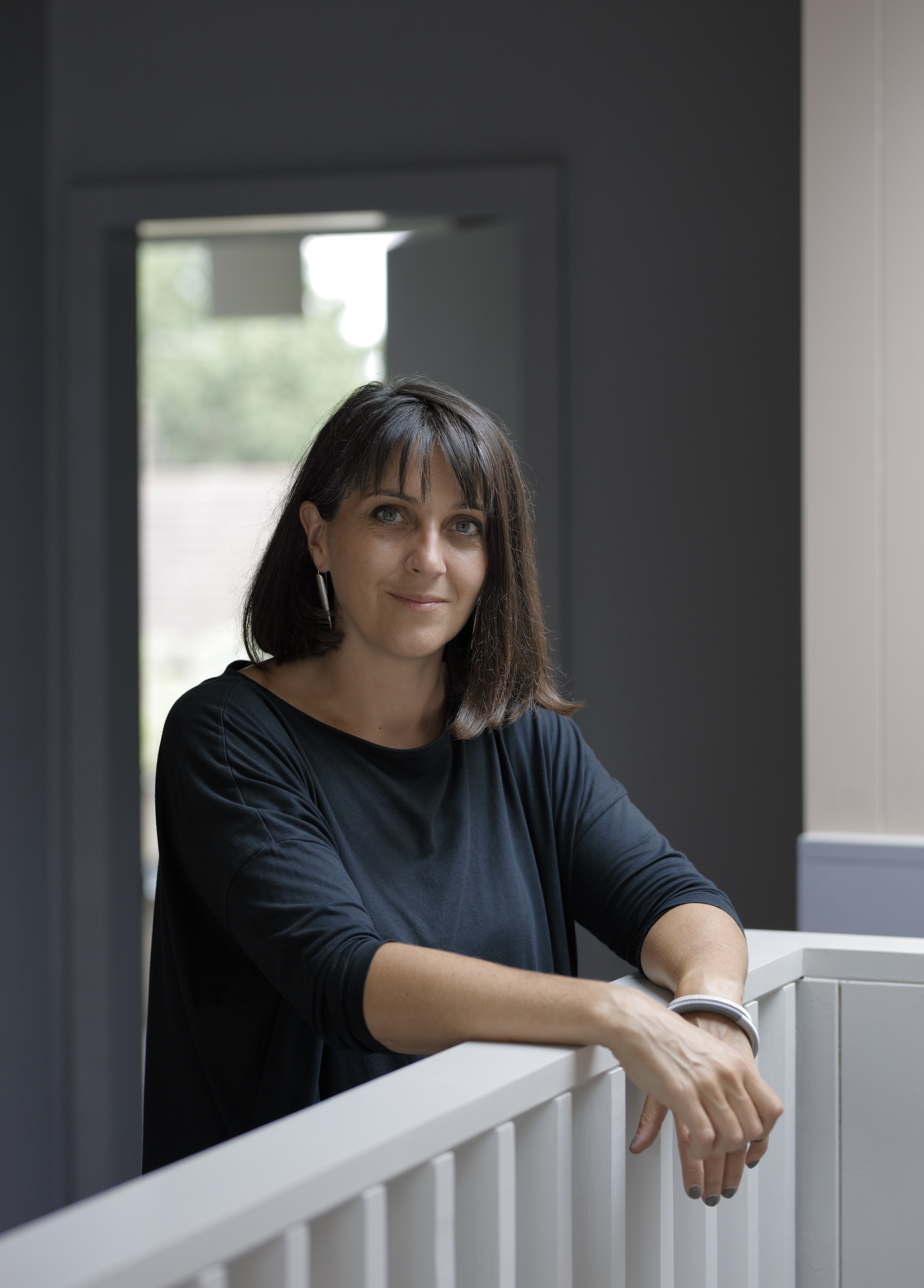
Today we speak to architect Kim Loddo. Kim studied architecture at Cambridge, M.I.T. and Harvard, and is currently a director of IBLA (Inglis Badrashi Loddo), a small, award-winning, design-led RIBA Chartered practice based in London. Their workload is predominantly residential (often involving listed buildings), although they have completed a broad range of other projects. Kim also has a longstanding interest in architectural education, having taught and examined at numerous institutions, including Cambridge, Sheffield, Manchester, Birmingham and Dundee. She is currently an external examiner at De Montfort University.
YGTV: Why is architecture important as an art form?
Kim Loddo: Architecture is fundamentally different from painting and sculpture in that it is both an art form and concerns itself with everyday life. Architecture has a function, and fulfils society’s most basic need for shelter. Good architecture can do everything that art and sculpture can do and more. Unlike artists and sculptors who often work alone, it takes a team to create a building, and architects have to collaborate with many others (engineers, clients, contractors and other specialists) to bring a building into being.
YGTV: Is it neglected compared to painting and sculpture?
Kim Loddo: It depends what you mean by ’neglected’. I don’t think so, in that it surrounds us all of the time, in a way that art and sculpture have, for the most part, to be sought out. But good design is often undervalued, and it is certainly less easily understood. I cannot recall any any exhibition or talk about architecture during my time growing up in Gibraltar. It is good to see that changing, albeit slowly.
YGTV: What do you look for when you come across an interesting building you haven’t seen before?
Kim Loddo: I look at many aspects of a building - how it sits in its surroundings; how it responds to its context and environment; its history, and how it fulfils its brief; how people occupy it; what it feels like to spend time and move around in; what it looks like, its scale and materiality. I am also interested in how it has been constructed, and in how it has been understood. There are many qualities that contribute to it - and one doesn’t need to be aware of them all to appreciate it - but in my opinion you do need to experience architecture spatially, rather than consider at it from one viewpoint.
YGTV: What makes an aesthetically pleasing building?
Kim Loddo: I think that is a loaded question, bound up in philosophical debates about beauty, taste, cultural context and style. I would suggest that thinking about a building (or visual art of any kind) through this one metric is problematic, but that, while we all respond to buildings differently, there is often general consensus on what is a ‘good’ building or a ‘poor’ one.
For me, in a nutshell, a successful building emerges through a dialogue between the project brief, the site and its context, that resolves these often conflicting requirements into a cohesive whole that contributes in some way to the culture that it is a part of.
YGTV: Are there any introductory books you’d recommend for people exploring architecture ?
Kim Loddo: I would recommend Alan Colquhoun’s 'Essays in Architectural Criticism’ or his ‘Modernity and the Classical Tradition’ to non-architects trying to find a way into thinking about architecture. Although written in the mid to late 1980’s, and dealing mostly with modernism, he argues that design cannot emerge from pure function or analysis, that all architecture is part of a cultural continuum, and that all form carries meaning.
One of the first books on the introductory reading list I was given as a young student was 'Experiencing Architecture' by Rasmussen. Written in 1959, it is dated and Eurocentric, with limitations and flaws, but remains a nicely written and easily accessible introduction to an experiential way of looking at the physical world. Le Corbusier’s ’Toward an Architecture' is an essential, hugely influential and seminal 20th C. text, and for something a bit different, Gaston Bachelard’s ’The Poetics of Space’, Italo Calvino’s 'Invisible Cities’ and Peter Ackroyd’s ‘Hawksmoor’ are also worth mentioning.
YGTV: Top three favourite buildings and why you love them?
Kim Loddo: I am a bit embarrassed to admit that this question has been the subject of much debate around our dinner table, and that I have probably considered upwards of 100 buildings as possible answers. I decided to choose ones that would be relatively easy for your readers to get to and into.
Somerset House in London, designed in 1776, was the UK's first public office complex. Located on the Strand, coincidentally next to Gibraltar House, it combined a number of government departments and cultural institutions arranged around a large internal plaza, and its south side was originally directly on the River Thames. It has an urban scale, with beautiful details, and a variety of internal spaces that have been modified over time to suit a host of different uses. I have spent countless hours sitting in the courtyard while my kids rode their bikes and splashed in its fountains in summer, drinking hot chocolate and ice skating in winter and looking at paintings in the Courtauld Institute (which takes up the north wing of the building).
La Mezquita in Cordoba is my second choice. Spanning from its origins in the 6th to the 16th C., it served as church, mosque, and cathedral, and is an iconic and beautiful work which holds countless lessons for us today. The spatial sequence from the tight streets of the Juderia, under one of its stone gateways and around the amazing Patio de los Naranjos, and then into the columned prayer hall and to the central verticality of the cathedral space, is pure magic. Structural innovation, masterful manipulation of light and dark, stunning decoration, a brilliant example of re-use, and of passive environmental design… I could go on and on. I remember first visiting it when I was about 12, will never tire of returning, and must plan another visit soon!
The last building I have picked is La Tourette by Le Corbusier, a 1960’s Dominican monastery in France. Designed to house 100 monks, I was lucky enough to stay overnight on a trip organised by my Cambridge studio professor back in 1999, and have such fond memories of it; a convivial dinner in the refectory with the community of monks and scholars who lived there, intense conversations, time sketching and wondering around the church and rolling grounds, and sleeping in one of the extraordinary cells. A radical re-working of a medieval monastery in rough raw concrete, it sits on a sloping site, and is arranged in a U -shape, with an inward facing loggia and roof terrace, and a church on the north side. The array of textures, colours and shapes, elevational treatments, and ways of bringing light into the building are fascinating. It was one of Le Corbusier’s last major buildings in Europe and, to my mind, one of the most moving buildings of the 20th C.
For more info, visit: IBLA on Instagram @ibla_london and their website www.ibla.co.uk