


Getting Into Culture…The Novel
We continue our series where we ask artists, poets, novelists, musicians, dancers and others for tips to help beginners appreciate and learn more about their art form.
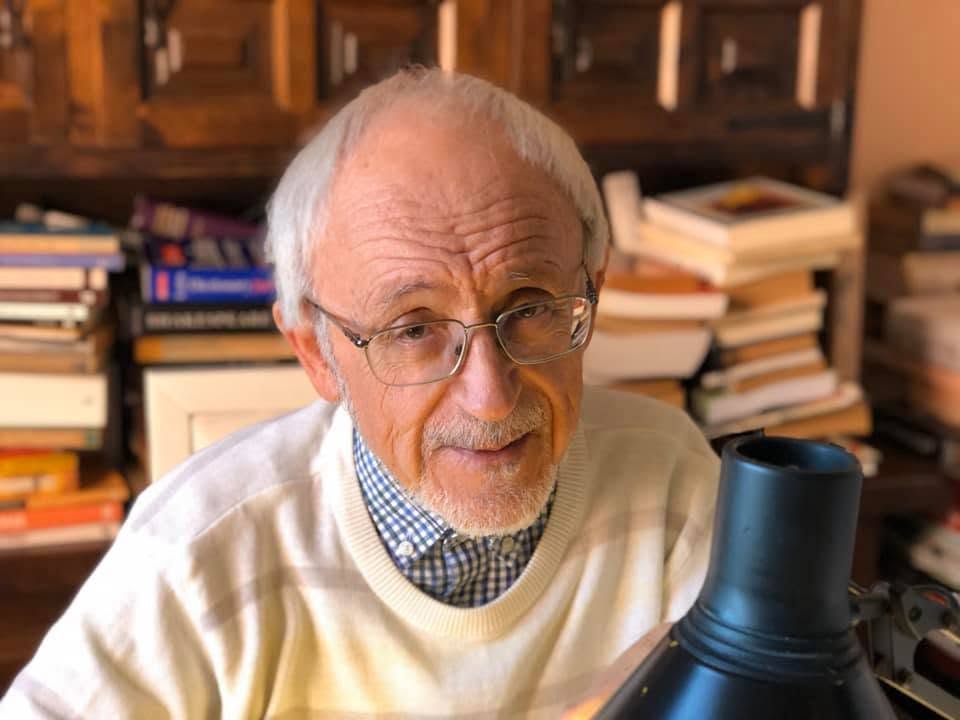
Today we speak to Charles Durante. Charles was Head of English at Westside School until his retirement in 2005. Since then he has judged the annual short story and poetry competitions and has published countless articles in The Gibraltar Chronicle about art, literature and religion.
YGTV: What exactly is a novel?
Charles Durante: The novel is the modern epic. It is usually concerned with a search for meaning which the characters must fashion for themselves. The novel depicts the ‘homme moyen sensuel’ and mirrors the everyday world. Realism and contingency characterise the world portrayed in most novels; the genre reflects the rise of the bourgeoisie with its emphasis on the material world, its sceptical approach to reality and its empirical orientation. Novels are invariably written in prose, are peopled by credible, well-rounded and psychologically complex characters, and explore the world we perceive with our senses. The novel is a protean genre, and it can absorb a wide range of ideas, emotions, feelings and perceptions; it is supposed to have died with the appearance Joyce’s Ulysses but is obviously still going strong.
YGTV: Why are novels important?
Charles Durante: The novel is the most potent literary instrument for analysing the circumambient world, for plumbing the depth of human personality, for appreciating the complexity of relationships. Like all worthwhile literature its aim is ‘ut moveat, ut doceat, ut delectet’: to move, to teach, to delight.
YGTV: What are your favourite novels and why are they meaningful to you?
Charles Durante: Spain’s Golden Age is waning, the strains of empire are showing, military glory hard to attain, the country is impoverished. Onto this disenchanted panorama steps an elderly (he is almost fifty) ‘hidalgo’ determined to revive the age of chivalry and perform feats of prowess only encountered in the chivalric romances he has read. Don Quixote has become synonymous with impractical behaviour, impossible undertakings and idealistic dreaming. However, Cervantes struck gold when he made Quixote mad and gave him a squire to accompany him in his peregrinations along the dusty roads of La Mancha. This novel revolves around the appearance and reality dichotomy: Quixote’s world reflects his idée fixe—a world embellished by his febrile imagination where an ugly country girl becomes Dulcinea del Toboso. Interestingly, Quixote is not always mad and when free of his chivalric obsession, he can discourse learnedly and reasonably. The novel sparkles with wit, humour, ‘burlas’ (tricks and jokes) when the paunchy Sancho contradicts his master, reminding him of a grim reality, where there are no giants, just windmills. Quixote’s discourses are undermined by Sancho’s realistic comments, flavoured with a string of rancid proverbs and adages. Quixote is sublime but absurd; Sancho is greedy, deceitful but very likeable. Though mainly comic, the novel is also deeply moving as the two companions become emotionally attached and, interestingly, start to resemble one another. Cervantes’ account of Quixote’s death is deeply affective. This novel, for me, is the epitome of certain aspects of the Spanish character: idealistic, fervent, deeply embedded in popular culture and life.
Among the different types of novels, the novel of ideas figures prominently. None can rival Dostoevsky’s The Brothers Karamazov for the clash of ideas, the sharp collision between the father and three siblings and the fathoming of raw emotions. Karamazov offers a picture of a Russian landowning family in the middle decade of the 19th century. It traces the disintegration of the family, with Fyodor Karamazov as the turbulent father, sensuous, feckless, violent, egotistic and nasty. The central idea which shapes the story is the visceral opposition between reason and faith, clearly delineated in Ivan, who is cold, distant, atheistic and uncompromisingly rational and his younger brother, Alyosha, who is devout, religious and morally upright. Ivan rejects God because he cannot accept a world where innocent children suffer. Then there is Dmitry, passionate like his father, but his sensuality is attractive and he suffers unjustifiably when wrongly accused of his father’s murder. The culprit is Smerdyakov, the illegitimate son who has acted at the instigation of Ivan.
Alyosha has a crisis of faith when his beloved Fr Zosima, his spiritual mentor, dies and his body putrefies. Alyosha expected a miracle but then realises this amounts to tempting God. At the heart of the novel, we find the legend of the Grand Inquisitor. This magnificent parable posits a meeting between Christ and the Spanish Inquisitor in Seville. The latter arrests Jesus and accuses him of offering mankind an impossibly high morality. People, the Inquisitor maintains, want miracle, mystery and authority. But Christ has rejected these when tempted in the desert. Instead, he offered free will and universal love. The Inquisitor sees Christ as an impossible dreamer and rejects him.
I have always been exercised by the competing pull of religious belief and rational philosophy. Dostoevsky, for me, examines this dilemma in the most powerful form.
James Joyce’s Ulysses was published in 1922 amid controversy about its morality. It quickly became the quintessential modernist novel. The work is over 700 pages long and has an epic, encyclopaedic range. The three main characters are Leopold Bloom, Molly, his wife and Stephen Dedalus. Surprisingly, all the action occurs on one day, 16 June 1904, and nothing out of the ordinary happens. Joyce rejects the heroics we associate with the epic, thereby showing his disgruntlement with the Irish Twilight stories of heroes. Instead, Bloom prepares breakfast, has a bath, attends a funeral, pops into a newspaper office, and visits a maternity hospital to find out if the wife of a friend has given birth. He masturbates when he ogles Gerty MacDowell’s frilly underwear. He then goes into a brothel to keep an eye on Stephen and rescues him from some drunken English soldiers. Stephen also has an uneventful day, giving a history lesson and then a lecture on Shakespeare. Molly, in fact, spends the day in bed where she receives her lover, Blazes Boylan, in the afternoon. So, what is the fuss all about?
Ulysses, in fact, is 18 novels in one, each episode constituting a novel in its own right. Joyce uses the stream of consciousness technique to delve into the inner recesses of the mind of his characters; he also developed a different style for each episode and structured his work according to the action enshrined in Homer’s Odyssey. The Homeric parallels are deeply embedded in the fabric of the novel and can occasionally generate comedy: Molly was Joyce’s Penelope, but Molly is nonchalantly unfaithful, Penelope a byword for wifely fidelity.
Ulysses is a celebration of ordinary humanity: it undercuts the pompous, the self-important, the power-crazy politician, the pretentious and humbug. In 2026, we all need Joyce’s powerful depiction of our everyday struggle for decency and humaneness.
YGTV: Why should we read the canonical novels like the three examined above?
Charles Durante: Because they matter as testaments of the human spirit, they create characters who are inexhaustibly fascinating, they enlarge our intellectual and emotional horizons. E M Forster’s Passage to India provides a scathing account of the corrosive effects of empire; Kafka’s novels portray the individual enmeshed in the mindless trammels of bureaucracy; Tolstoy’s War and Peace traces the effects of war, political ambition and national devastation; Proust’s mammoth novel deals sensitively with childhood, the nature of memory, the enigma of time and the power of homosexual love.