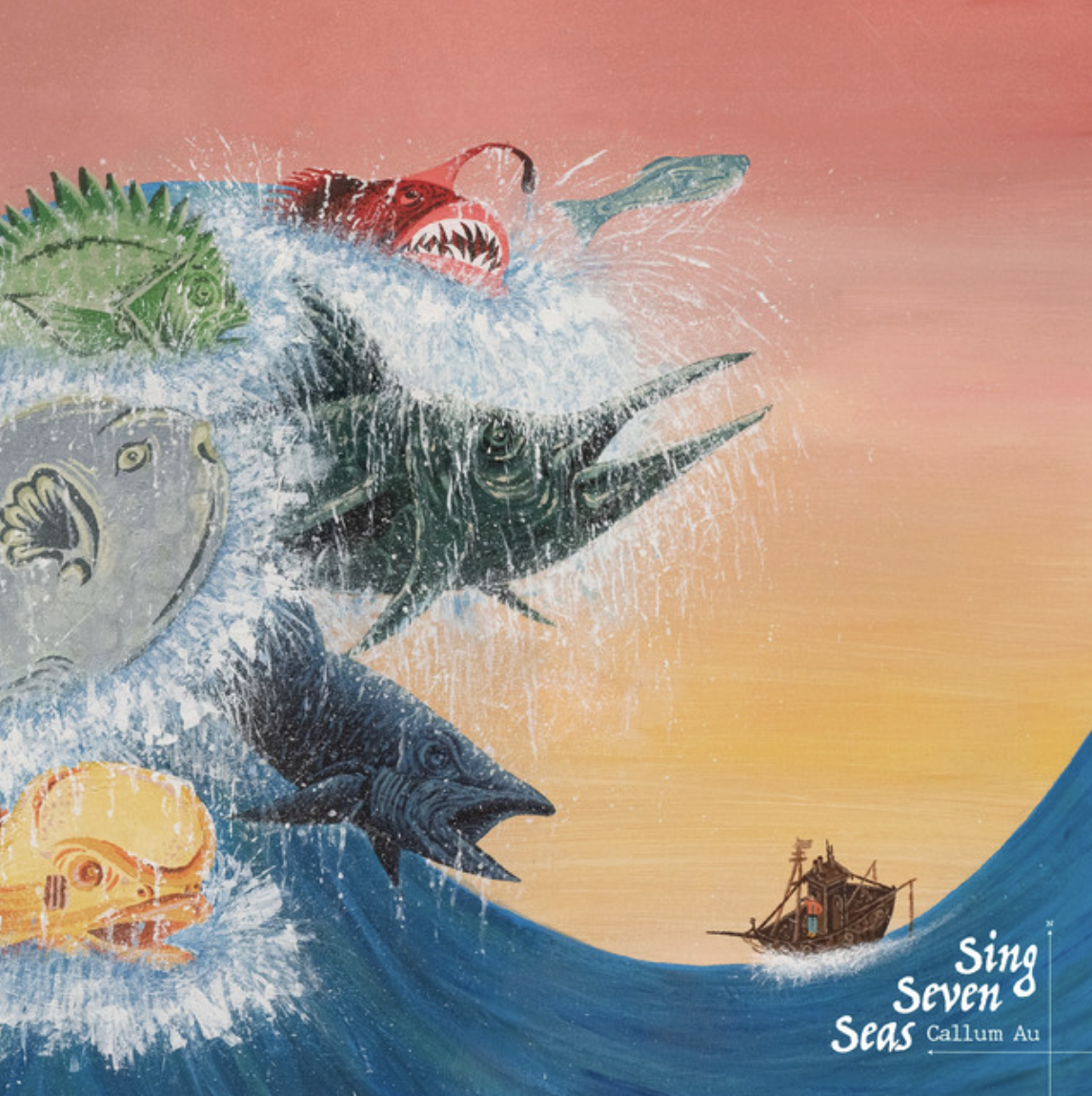



What I’m Listening To… ‘Sing Seven Seas Vol. 1’ by Callum Au
‘Sing Seven Seas Vol. 1’, released in June, brings together seven compositions by the British composer, arranger, and trombonist Callum Au. The music is profusely eclectic, blending swing, bebop and contemporary jazz to produce multi-layered, orchestrally complex works. While this volume shows off his compositions, volume two—which I hope to review soon—acknowledges those who have influenced Au.
The sheer ambition behind this project is worth highlighting: over 80 musicians came together over a week in August last year to record these tracks at a private school in London that doubled as a studio. (For contrast, remember that a typical jazz big band is made up of around 12-30 members.) Without the backing of a major record company, the album was funded by a Kickstarter campaign and released on Chairman Music, Au’s own label. It was mixed and mastered by Chris Traves.
Although the swing sounds of the first track hark back to the past, the title, ‘Swipe Right!’ (when we show approval on a dating app) is unshakeably modern. Launched by a slightly off-kilter, Monk-like piano figure, the music soon slips into that unfettered joy that only big band swing can bring. A clarinet solo (Duncan Hemstock) once again reinforces links with the 1930s with music (and playing) that is clean but never clinical.
In ‘Galt’s Motor’, Jake Wilson’s electric guitar is the first of many busy instrumental details. I’m not usually a fan of jazz-rock fusion because it leaves me cold but this is different as the music soon builds up to a satisfying emotional peak. When Wilson’s guitar theme returns, it carries the rest of the band with it, reinforcing that unignorable sense of getting things just right in these compositions, of intelligently building up to where we expect and want to music to go while also pulling out a few surprises on the way. Even where a particular passage might seem to drag, we later recognise it as a necessary preparation for a curious climax, building up to music of symphonic heft.
Talking of symphonic heft, ‘Si Vis Pacem Para Carnyx’, the next track, starts off sounding like a Strauss tone poem or film music, conjuring images of grand vistas with horn calls. Once again, the jazz here is eclectic and packed full of revelations like when a military drum beat leads to an Irish folk interlude. Au’s music is stylistically adventurous but it is vindicated by the most important tribunal of all: the curious listener’s mind and ear.
The pace eases for the beginning of ‘Tehys’ which seems to be, at first, music on the lookout for a theme to grasp and develop. The music eventually swells and becomes more emphatic with brass and the electric guitar. ‘Tehys’ is a slower burn than the previous tracks but it rewards patience. We’re soon jolted upright by the flaring brass fanfares of ‘Murmurations’ and Au’s trombone solo here is splendid. This is smart, slick music that could have easily been the theme tune for a multi-generational TV drama, perhaps hinting at the composer’s film music background.
The beautifully crackly sound of Nadim Teimoori’s sax, backed by nostalgic strings, are highlights of ‘The Weaver’. A few minutes in, a genially rambling piano and harp interlude prepare the ground for a bittersweet restatement of the theme.
If the album opened with a nod to the contemporary world of tech, it ends with it too: 'jazz .ai' is an amusing, cautionary tale about the use of AI to play jazz. The voiceover details the ‘global cacophony’ unleashed when AI goes rogue while Au’s music—half-crazed and virtuosic—provides a fitting prop to the narrative.
There is some outstanding musicianship on display here. The band and soloists Au has brought together show great discipline and polish and their playing makes a strong case for these unusual but captivating works. Au’s music manages to reforge the spirit of Ellington and Basie, the two giants of big band music, in a way that makes them speak to and for our time. There’s a bit of everything here: chaos, impassioned solos, orchestral detail, brash horns and a cinematic sweep built out of epic, soaring tunes. Even on a first listen—and reinforced by further immersion in the album—the compositions here had me swaying to their meticulously prepared climaxes. The main strength of this confident and accomplished album is that it is difficult to classify. It represents an enjoyable way to explore what jazz is up to in 2026, particularly for listeners who appreciate intricate orchestral compositions and arrangements.
About this series: In this series, we’re going to live with an album for a week. I’ll listen to it on repeat as I walk up town, do shopping and wait for my daughter. I’ll let it all sink in so it becomes the soundtrack of my days…and then I’ll write about it. Expect variety: I’m passionate about classical and jazz but will also be revisiting my favourite albums from the last 50 years from the Doors to Suede and even new releases. Hopefully, with affordable streaming services, you’ll do the same and encounter unfamiliar music you will grow to love, or disagree with, or simply ignore.