


Exploring Artworks: Judith Shaylor’s ‘Dog with a Broken Back’
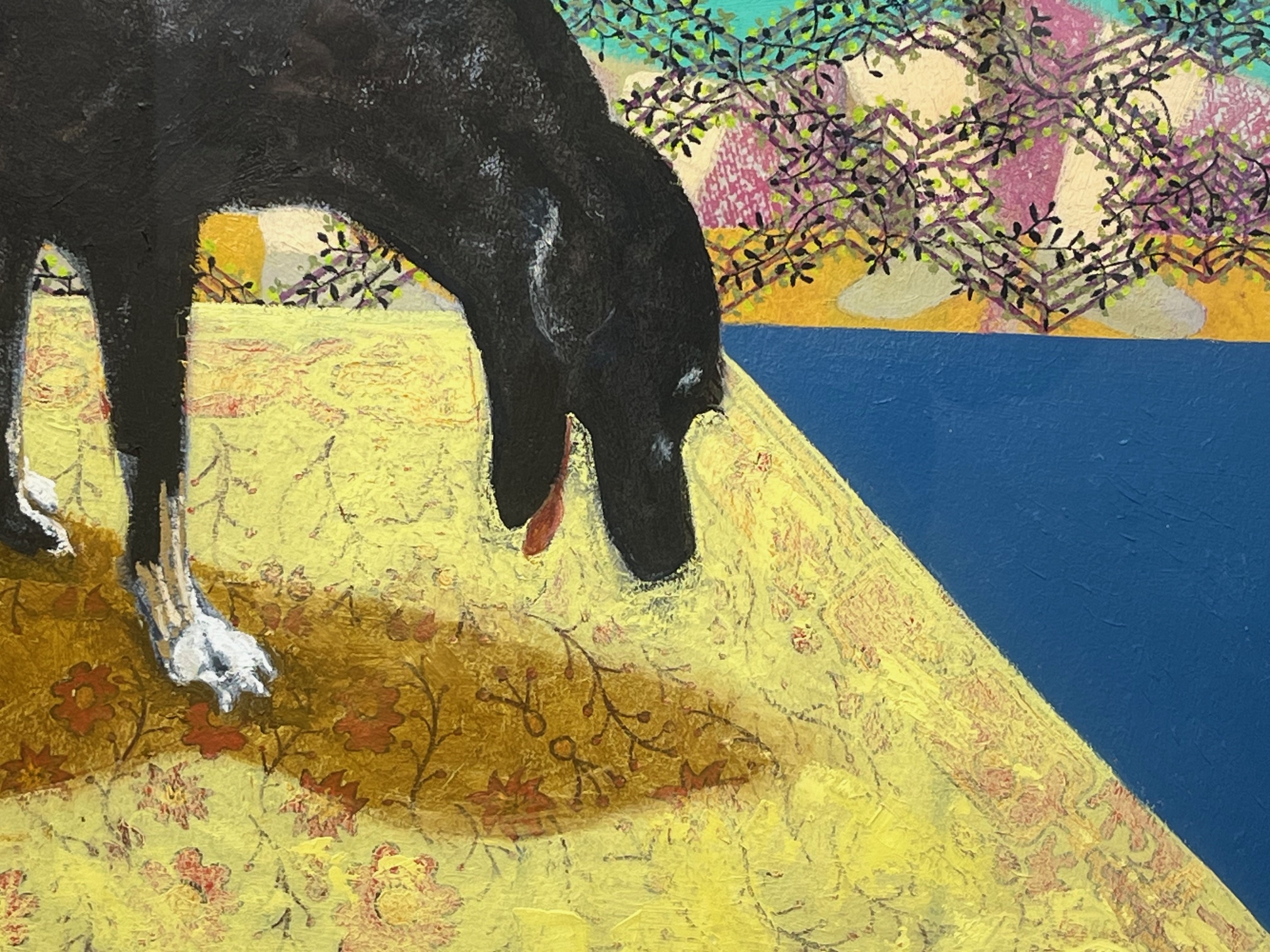
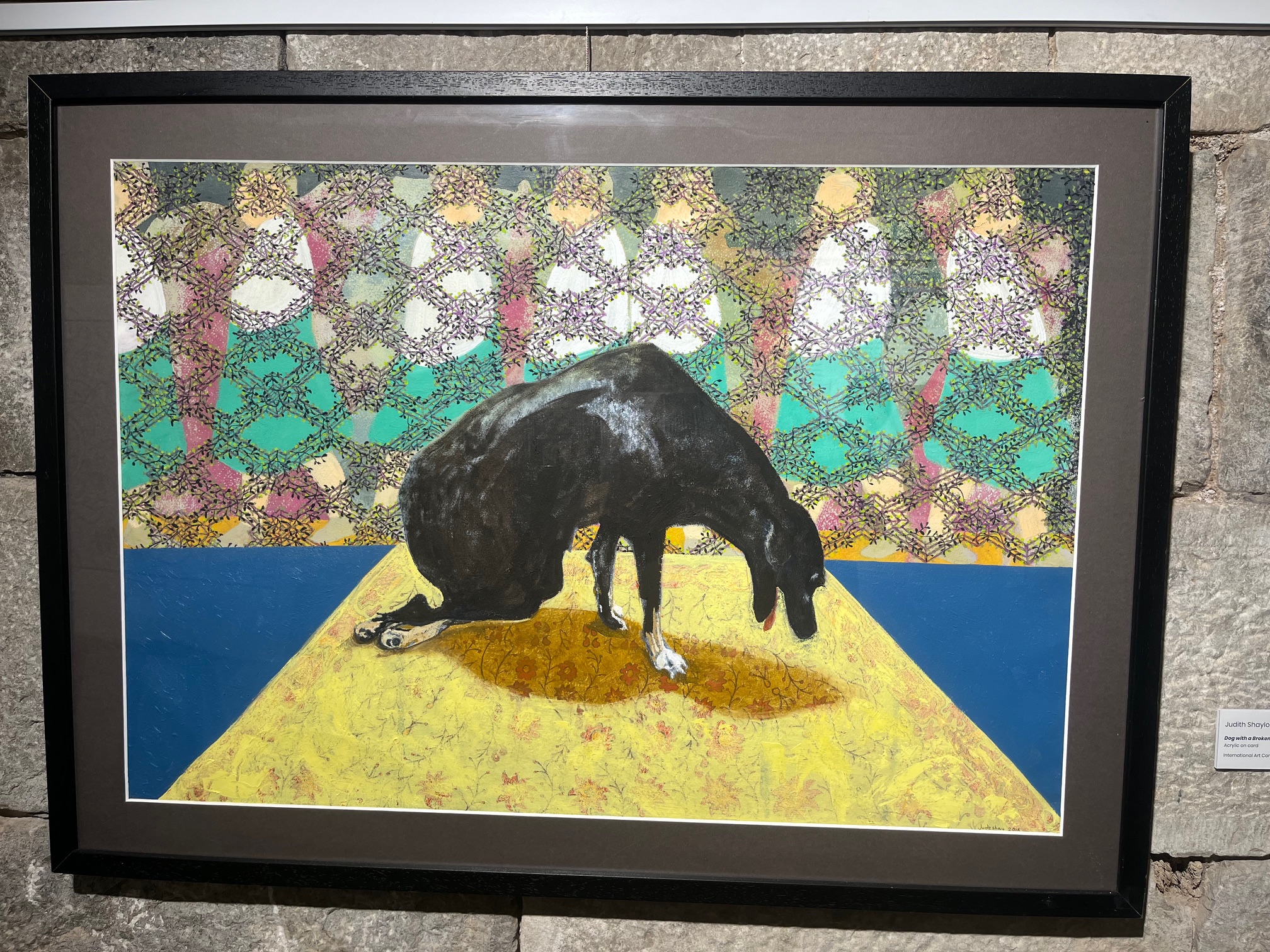
As part of this regular series, today we look at Judith Shaylor’s ‘Dog with a Broken Back.’ The painting, which is currently on display at the GEMA gallery, was awarded the first prize in the 2018 International Art Competition.
Born in 1966 in Wolverhampton, UK, Judith Shaylor left school at 16 to study at Bournville School of Art, where she studied for a BTEC diploma in art and design. She then obtained a BA Hons degree in drawing and painting at the Edinburgh College of Art. In June 2024, she was elected a Professional Member of the Society of Scottish Artists and awarded a Visual and Craft Maker bursary from Creative Scotland. She is currently an Edinburgh-based visual artist.
Shaylor works primarily with egg tempera, a medium she started exploring in 2023 through traditional methods on gesso boards and panels. She says that “exploration of the interplay between historical techniques and contemporary materials, with the aim of revealing their narrative and emotional potential” is central to her practice which is always evolving.
We caught up with the artist in order to find out more about the background to this work and what she was trying to achieve.
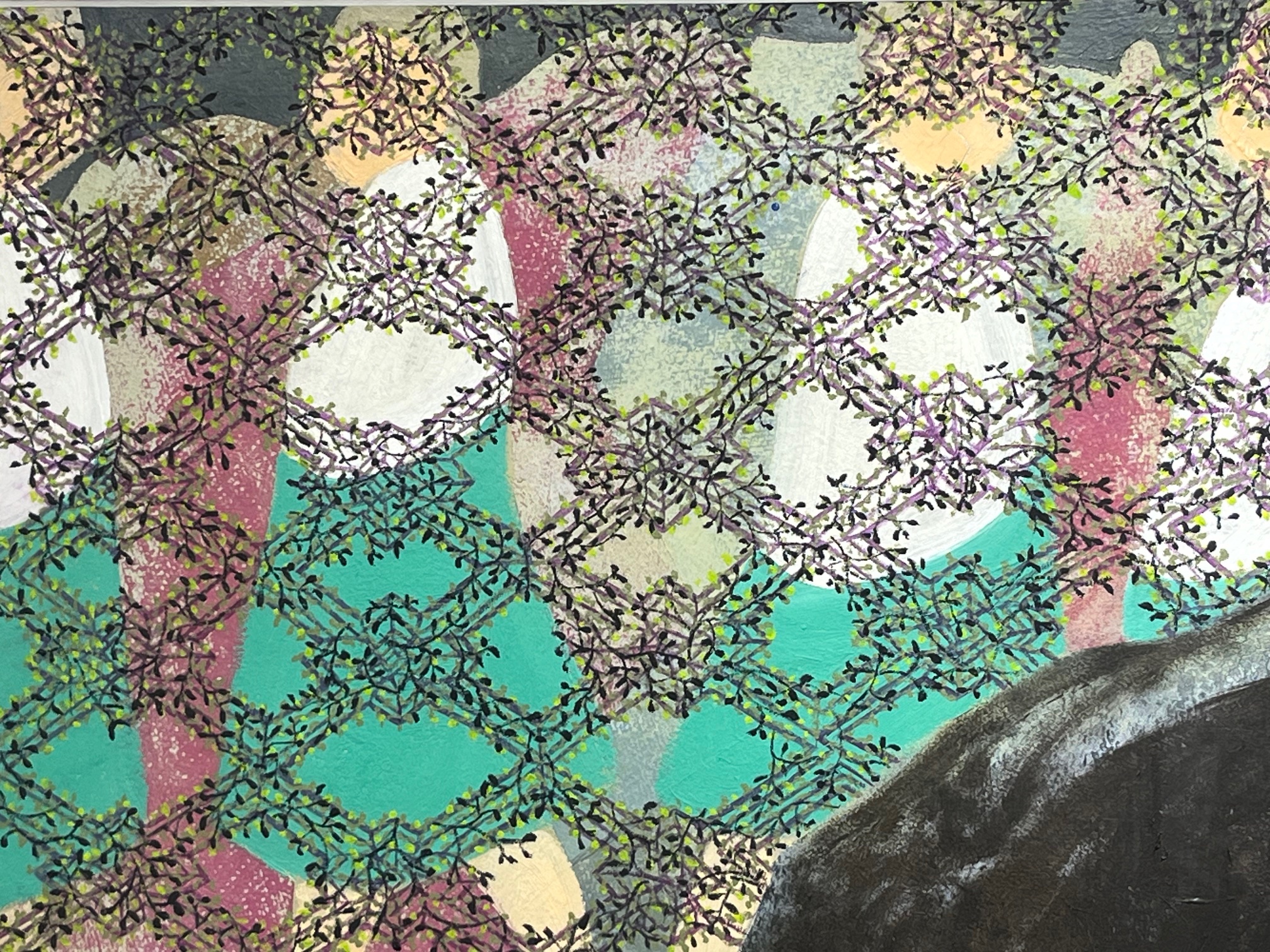
She said: “I have two dogs, so due to algorithms on Facebook and Instagram I am often bombarded with reels and stories related to the plight of abandoned dogs. This got me thinking about how, generally, due to this over saturation of this type of imagery we tend to take these images for granted and most of the time scroll past them. I thought about Goya’s drowning dog, a beautiful yet harrowing image of a dog in plight - this set me off with the idea of creating ‘Dog with a broken back.’ The dog was taken from a video still of one particular Facebook reel which I had encountered and so I set to work to try and create an image where the audience would have to both look at the disturbing scene, yet have questions about why and what was being represented. My work at the time was quite maximalist with regard to pattern, which I would often paint and then obscure building up to the final result.”
One thing that stands out, when one browses Shaylor’s online portfolio, is the sheer variety of her work. We ask her to explain how this eclecticism developed.
“I have never liked to be pigeonholed into one particular style or even medium. Right after the winning of the prize my work shifted to photography and installation,” she explains.
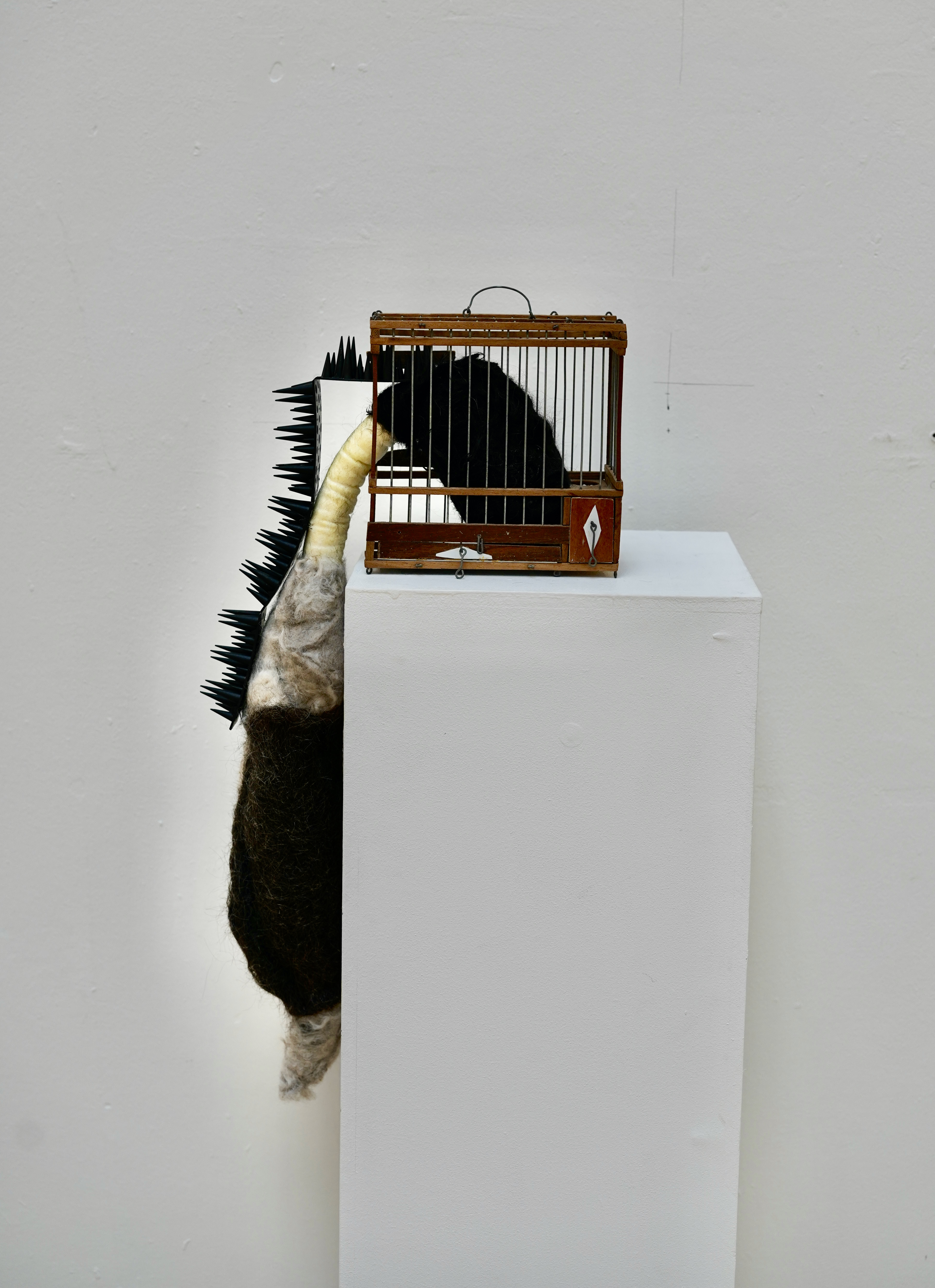
“Due to meeting the RSA judge Brian Catling, I started using egg tempera and my work moved towards expanding and exploring that as a medium. At the moment I am studying for a masters in contemporary art practice in Edinburgh College of Art/ Edinburgh University. I am exploring a more sculptural practice, combining found objects with a more textile based process. For instance I have wet felted both of my dogs’ hair and mine to create a family portrait.” (Image is at the very foot of this article)
Speaking about winning the top prize for ‘Dog with a Broken Back’ in 2018, she says: “It was amazing to win, and such an honour to receive it from an artist like Brian Catling who I greatly admire as an artist. Sadly, he died in 2022. I remember at the time the choice was highly controversial—Catling at the time said he had rushed to the exhibition the afternoon of his arrival to Gibraltar and the piece that night gave him nightmares. He went on to praise the work as being not a simple piece—he could see the layering and time-consuming process. A lot of the Gib artists who I had got to know over the years ( I was a member of the Fine Arts Society) were very supportive and happy for me. I often wondered what happened to the work, I never saw it on the walls of GEMA , I got the impression that it wasn’t a piece they wanted on public display.”
She continues: “I gave a thousand pounds of my winnings to two animal charities. One was a lady in La Línea who worked tirelessly to help abandoned dogs and cats and another was a man living near to Tarifa who again helped mainly cats. It was important for me to use some of my winnings to help the muse that had got me the first prize.”
Looking back, we ask what her feelings are today towards this artwork.
“The work still resonates with me. It was and still is an important work in my archive. I still use the camera I bought with the remaining prize money, so I am always reminded of it. It also led to me to discover the work and writing of Brian Catling, which has gone on to me developing work around his writing and more importantly the medium of egg tempera.”
Moving on to consider the input of other artists regarding this powerful work, we contacted Kyrane Lia, an Art teacher at Westside School.
She said: “The painting shows a dark dog dominating the foreground with its spine curving into an unnerving arch, forming the peak of the composition. The hunched back and downward head suggests deep physical pain and trauma. Shaylor rests the dog in isolation on a striking triangular plane which almost acts like a spotlight. The spatial tension continues with the highly decorated backdrop which contrasts sharply with the depiction of the dog. The space is almost claustrophobic where the patterns act as a prison-like wall pushing the dog forward into our eye. I see a thematic parallel between Shaylor and Frida Kahlo where Kahlo too uses sprouting vines as a metaphor for pain and vulnerability. By using sharp vines, a scene of trauma and physical fracture is created. The dog’s spine curves like the vines echoing the fragility of its body. The use of the bright and hot yellow contrasting with the blues and ornate background further enhances the uncomfortable environment of the dog’s quiet physical agony.”
Art enthusiast Charles Durante said: “We usually avoid having to dwell too much on suffering, but in this painting, Judith Shaylor has bravely lavished her artistic talent on portraying a broken-backed dog, probably undergoing excruciating pain and nearing the moment of its death.
“The pain is conveyed by the downward sloping of the back, the collapse of its hind legs, the way the dog’s muscles are atrophied and the unsteady balancing of its front legs. The poor creature is gasping for breath, its tongue hanging out of its mouth, its head drooping and stretched out.
“The sheen on the dog’s coat both reflects hours of loving grooming; it also emphasises the dark colour of its fur. The background is mysterious, difficult to decipher: a thin wall of rhombus shapes hides figures which have a human contour but never acquire clearly defined features. They seem to inhabit a garden, and the vegetation reflects the beautiful flowers on the carpet where the dog is panting and dying. This juxtaposition of suffering and natural beauty is reminiscent of a Bruegel painting, The Fall of Icarus where the young daredevil has fallen from heaven into the sea and is about to drown but nature carries on regardless.
“This painting is unforgettable: once seen, it haunts the imagination.”