


Interview With Tessa Risso-Restano—Photographer
Following her recent trophy win at the annual Gibraltar Photographic Society’s Competitive Exhibition (her photo “Growing under the smoke of progress” was awarded the Joan Wakelin Cup) we caught up with local photographer Tessa Risso-Restano to speak about how she first became passionate about photography and the exotic locations she’s travelled to in search of the perfect shot.
Tessa says she’s enjoyed taking and looking at photographs as long as she can remember. She says “there’s something about being able to look back at a moment in time and remember where you were, who you were with and what was happening.”
During a course with the Photographic Society when film cameras were still in use, Tessa learned how to develop her own photographs in a dark room. Although the technology has now swiftly moved on, she still feels attached to previous practices: “I found that whole process fascinating. There was something quite magical about taking a photograph and then having to wait to see how it turned out, rather than being able to look at it instantly on the back of a screen.”
She adds: “There’s not really been one particular moment where I decided to take photography more seriously. It’s just something that has gradually evolved over the years. Eventually, I bought myself a ‘proper’ camera rather than just a point-and-shoot, and that opened up a whole new side to it. Suddenly, there was so much more to learn — understanding the settings, controlling the camera and realising that you could actually influence how you wanted the photograph to look.”
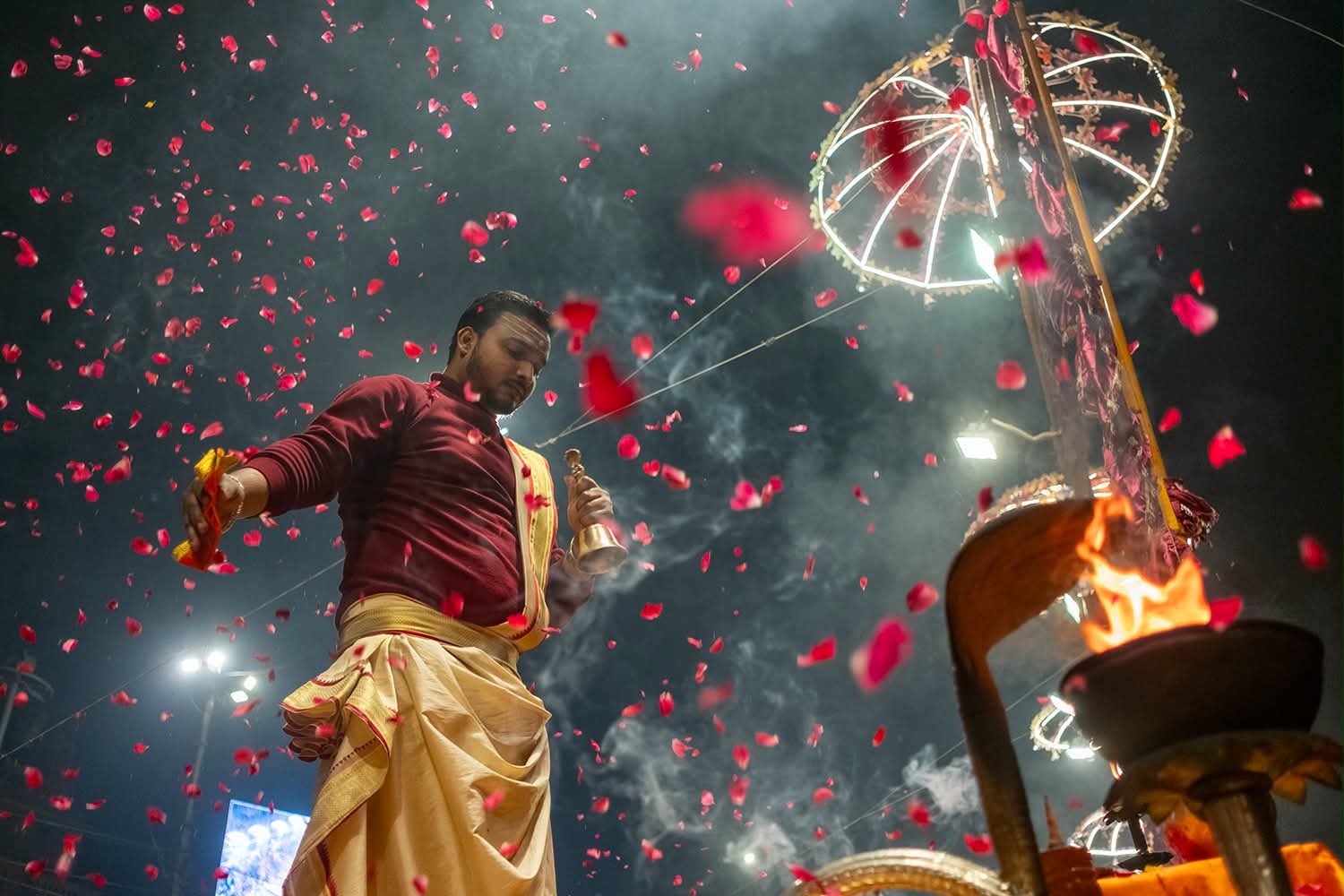
Pic: Ganga Aarti - taken in Varanasi at the closing of the Ganga
While some are content to snap birds up the Rock or the fountains of la Plaza de España in Sevilla, Tessa has pointed her lens much further afield with photography trips in the last few years to Kenya (twice), Bangladesh, Nigeria, India, Malaysia, the Philippines and Japan.
“Each place has been completely different,” she says, “and that’s one of the things I love about photography — it gives me a reason to travel, experience different cultures and meet people I otherwise might never have crossed paths with.”
Although reluctant to pick a favourite out of all the countries she’s snapped, she highlights Kenya—“[it’s] somewhere very special to me. It was the first photography trip I ever did, and I went with my auntie, who is also a very avid photographer. Having that time together, just the two of us, was really special.”
In fact, two years later, Tessa returned to Kenya with her mother and auntie again, this time to celebrate a landmark birthday.
“The people there are so warm, caring and kind, so Kenya will always hold a very special place in my heart.”
India, too, has left a lasting impression on the globetrotting photographer: “India is just magical. Varanasi in particular is somewhere I find really difficult to put into words. I can’t quite pinpoint exactly what it is, but there’s something about that place that feels completely unlike anywhere else I’ve been.”
Finally, Tessa feels she has to also mention the Philippines: “The people there are quite possibly the happiest I’ve ever had the privilege of meeting. There’s such a warmth and openness to the people, and that really stayed with me long after I left.”
Always planning ahead, Tessa says she usually times her trips to coincide with religious festivals that promise to be visually stunning and that reveal a people and their culture.
She explains: “When we went to India, the Maha Kumbh Mela was taking place. It’s the world’s largest peaceful religious gathering and a sacred Hindu pilgrimage, where millions of devotees bathe in the holy rivers. We were there for the Royal Bath, when the Sadhus bathe, and that was just such a crazy, intense but incredibly beautiful experience. Being in amongst that many people and witnessing something that’s so important to them definitely pushed me outside my comfort zone.”
Similarly, her trip to Bangladesh coincided with the Bishwa Ijtema, a three-day Islamic gathering and, in the Philippines, she went to witness the Passion, which she describes as a “very intense experience.”
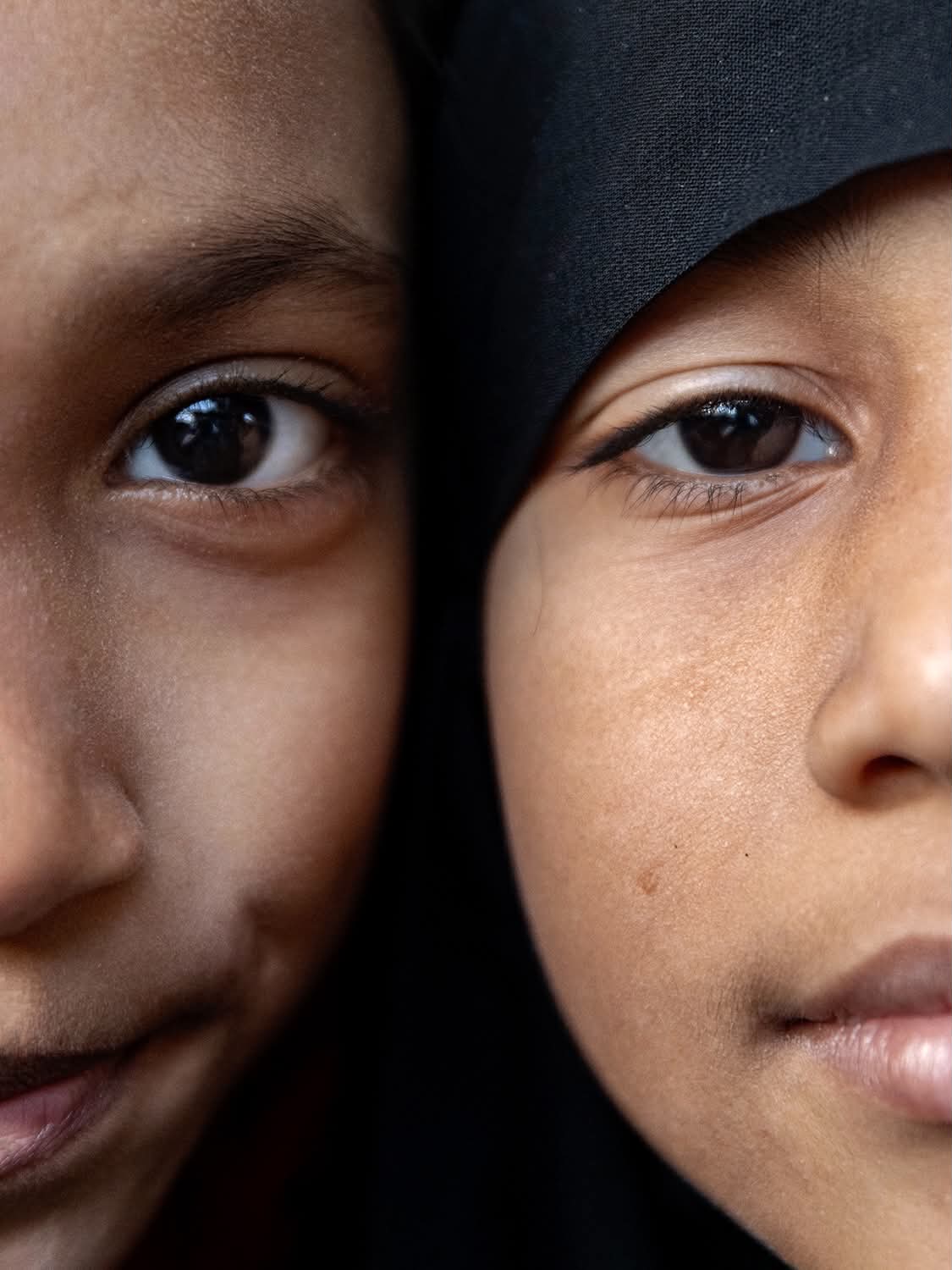
Pic: Jasmine & Lamia - taken in Koral Bosti, Bangladesh
Many travellers might feel a sense of trepidation when discovering unfamiliar countries and cultures but Tessa says she hasn’t felt in any danger—if anything, any shocks felt have come from witnessing something “completely outside of my normal world.”
“You have to be aware of your surroundings, respect the people and the culture, and sometimes just go with the flow. I think that’s part of the reason I love these trips — they definitely push you outside your comfort zone.”
Once settled and acclimatised, Tessa starts snapping away, but what is she looking for exactly? What draws her attention as a photographer?
"I try to capture something that is genuine. A smile, a moment in time, a hug, a glimpse into someone’s day-to-day life — those little moments that might seem insignificant at the time but actually tell you so much about a person or a place.”
She admits she’s not necessarily looking for the perfect photograph or something that feels very “posed.”
“It’s more about catching a moment that feels real. Sometimes it can be something really simple, like the way someone looks at another person, a quick laugh, or just someone going about their everyday life completely unaware of the camera.”
She explains that she loves this aspect of photography: “You’re essentially freezing a split second that would otherwise disappear, and suddenly you have something that allows you to remember that person, that place and that exact moment long after it’s passed.”
We ask Tessa about how she approaches her subjects, how she seeks their permission to feature in her photos despite the language barrier. Where English isn’t spoken, she explains, “communication often comes down to gestures, smiles and laughter,” adding that she never wants to turn up and “simply point a camera at someone and shoot — I don’t think I’d get a genuine photograph that way.”
With the initial approach made, Tessa says it’s then important to establish a rapport with the person she intends to photograph. “It starts,” she says, “like any interaction: with a small conversation and getting to know the person, even if that conversation is sometimes entirely non-verbal. Sometimes you can spend the longest time with someone and, in the end, they’ll still say no. I always respect that. I completely understand it because I don’t particularly like having my own photo taken, so I think it’s important to make the person in front of the camera feel as comfortable as possible.”
Once the subject agrees and the photo is taken, Tessa says one of the most enjoyable and rewarding parts of the process is showing them the result. One gets the sense that her photography is a deeply human pursuit that seeks out person-to-person connections rather than a matter of technical challenges.
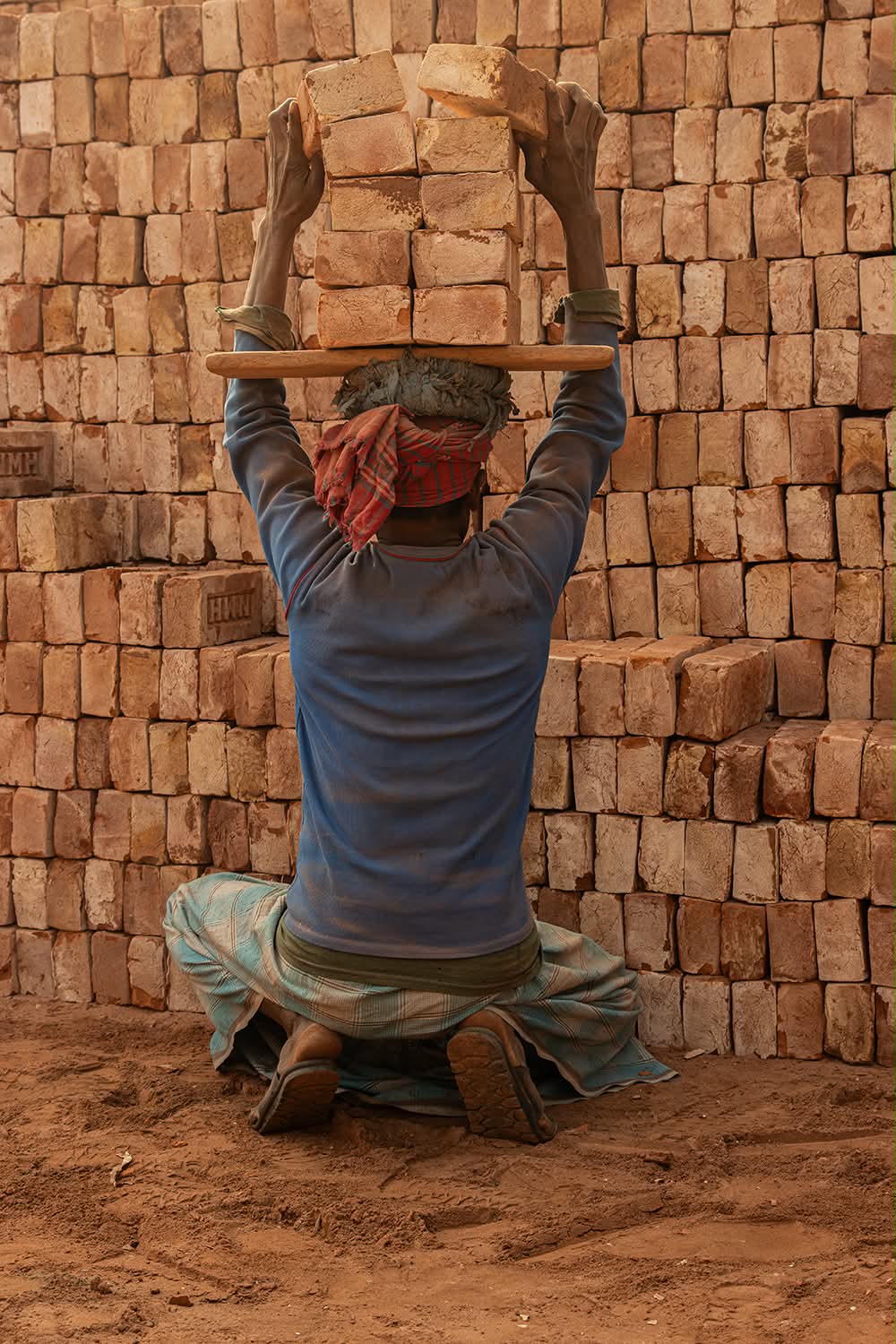
Pic: Brick by brick: the weight of work. Taken in a brick factory in Bangladesh
“Usually, once I’ve taken a photo, I’ll show it to them on the camera screen. That’s often a really fun way to interact and break down that final barrier. Seeing their reaction to the photograph is probably one of my favourite parts.”
Many of the photos taken by Tessa in these off the beaten path locations have been recognised with awards and have featured in exhibitions, but the photographer says her primary aim is to record a feeling, a place, and a time: “To be honest, I take photos because I don’t want to forget how I felt at a particular moment in time. Having a photograph means I can go back to that moment and remember where we were, what was happening and, more importantly, how I felt at the time. I never take a photo with a competition or exhibition in mind — I think that would put too much pressure on it.”
Being recognised in competitions, she confesses, is something that makes her feel “slightly embarrassed…I’m quite a shy person, so having people compliment something I’ve done is still something I’m getting my head around.”
She ends our chat with us by noting that she values the connection a photo can establish with the viewer: “I’m just happy when a photograph gets to see the outside of my hard drive, because that’s where the majority of them live! But when a photograph that I took for myself connects with someone else, and they see something in it that makes them stop and look, that’s incredibly special. I think that’s probably the greatest recognition I could ask for.”
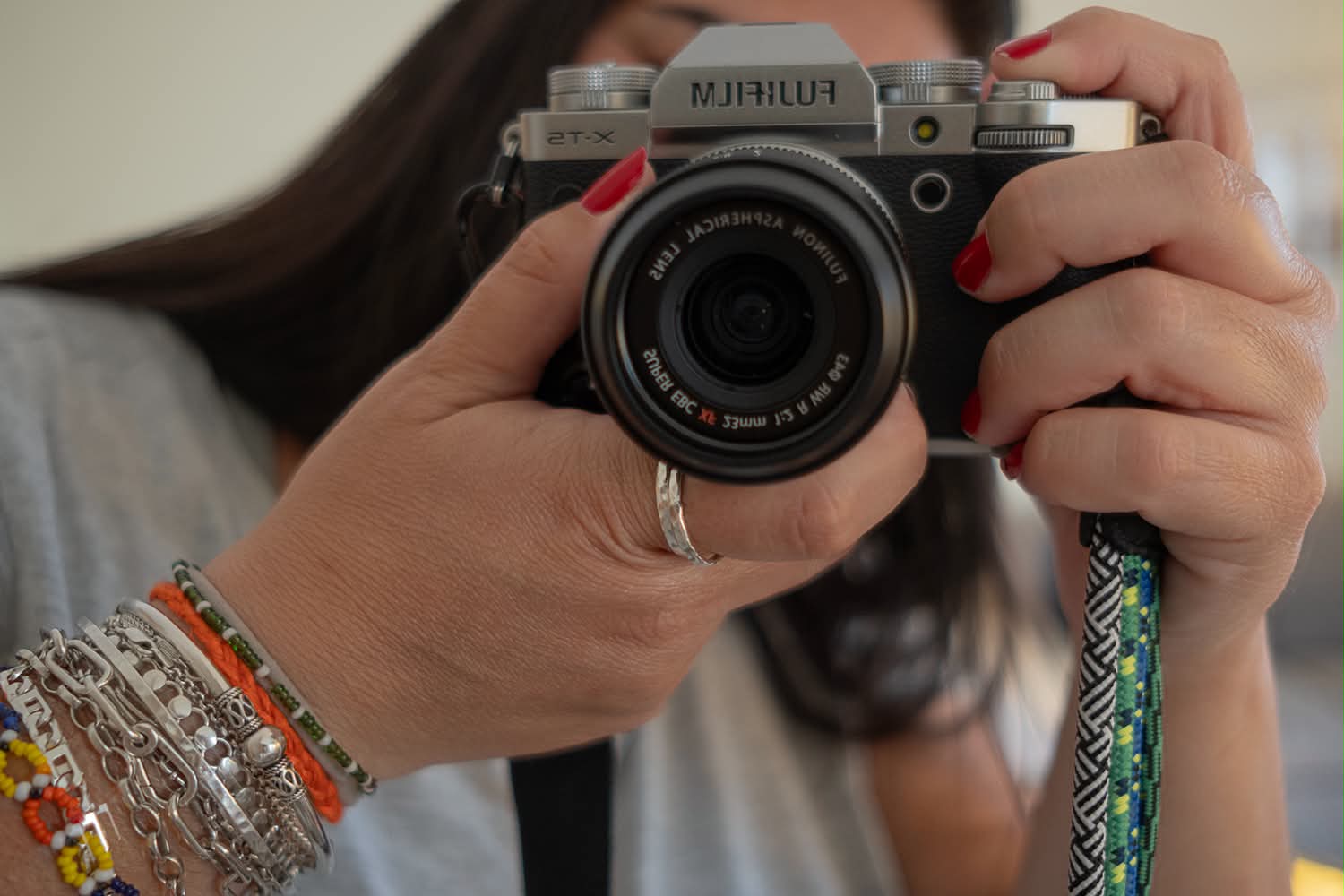
Below: Tessa behind the lens