


Government Reviews Gibraltar’s Security And Civil Contingency Risks
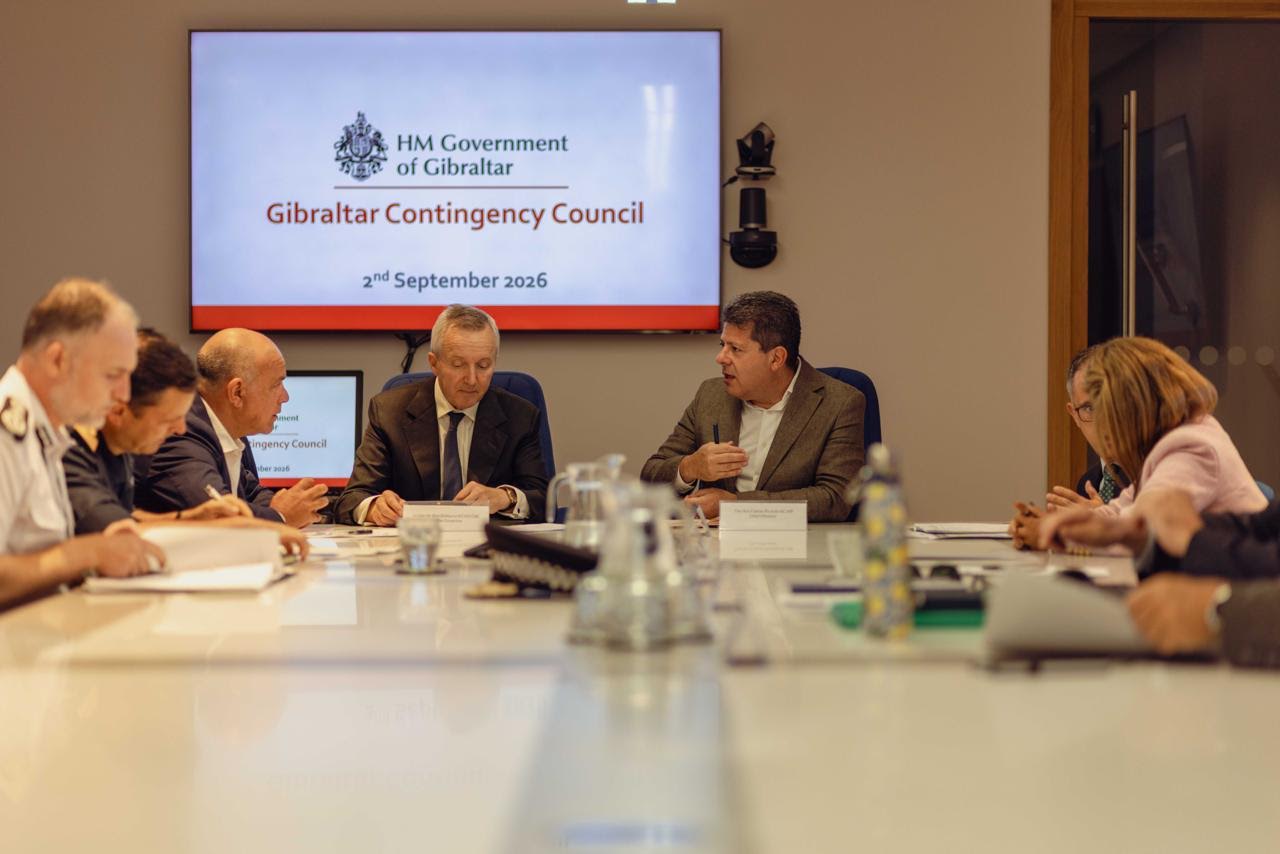
The Gibraltar Contingency Council has reviewed the Rock’s security and civil contingency risks, including terrorism, cyber threats, public health and wildfire preparedness.
The Council confirmed Gibraltar’s terrorism threat level remains at MODERATE, meaning an attack is possible but not likely.
A statement from the Government follows below:
The Gibraltar Contingency Council (GCC) met today at the Strategic Coordination Centre at No. 6 Convent Place to review the current security environment and Gibraltar’s preparedness for a range of security and civil contingency risks.
The meeting was co-chaired by His Excellency the Governor, Lieutenant General Sir Ben Bathurst KCVO CBE, and the Chief Minister, the Hon Fabian Picardo KC MP. Also in attendance were the Deputy Chief Minister; the Minister for Health, Care and Business; the Minister for Civil Contingencies; the Attorney General; the Commissioner of Police; the Commander British Forces Gibraltar; the Deputy Governor; and the Civil Contingencies Coordinator.
The Council reviewed significant international, regional and local developments since its last full meeting on 1 April 2026. These included the continuing implications of the United States and Israeli strikes against Iran, the resulting regional instability and the potential wider security consequences for Gibraltar.
The GCC also reviewed the United Kingdom’s decision on 30 April to raise its national terrorism threat level to SEVERE. The Council had convened on 1 May to consider the implications of that decision and, following an assessment of the available intelligence, determined at that time that Gibraltar’s terrorism threat level should remain at MODERATE.
At today’s meeting, the Council received updated assessments from the Royal Gibraltar Police and the Ministry of Defence. Having considered the latest information, the GCC assessed that Gibraltar’s terrorism threat level should remain at MODERATE meaning that an attack is possible, but not likely.
The Council considered the continuing threat posed by hostile state activity, including recent statements and threats directed against the United Kingdom by the Russian Federation. The GCC also reviewed the potential for malicious cyber activity, sabotage, disinformation and other hybrid activity affecting UK interests, critical infrastructure and strategic locations. Relevant agencies will continue to monitor these developments closely and maintain coordination with UK partners.
The GCC noted that cyber threats remain persistent and continue to evolve. The Council emphasised the importance of maintaining effective cyber security arrangements across all sectors of society. It also noted recent National Cyber Security Centre reporting on hostile state-linked cyber activity and the need for organisations and individuals to remain vigilant.
The Council reviewed public health developments, including the multi-country hantavirus outbreak reported in May and the Ebola virus disease outbreak affecting the Democratic Republic of the Congo and Uganda. It was briefed on the ongoing assessment of any implications for Gibraltar and the preparedness and surveillance measures in place.
The GCC also reviewed a number of incidents, including the fire at Ocean Spa Plaza on 4 June and the fires at Devil’s Tower Road and Cornwall’s Lane on 26 June. The Council formally recognised the professionalism, commitment and coordinated response of Gibraltar’s emergency services and supporting agencies in dealing with these incidents. Their work helped to protect the public, limit disruption and bring the incidents under control.
The extensive wildfires experienced across Europe during July and August were also discussed. The GCC considered the increasing risk posed by prolonged periods of extreme heat, dry conditions and climate change, together with the implications for Gibraltar’s wildfire prevention, emergency water supplies, operational readiness and multi-agency response arrangements.
The Council further considered the security implications of the mass migrant crossings into Ceuta on 30 and 31 July. Although these events did not directly affect Gibraltar, the GCC agreed that developments in the surrounding region should continue to be monitored closely by the relevant authorities.
The Council was satisfied that Gibraltar’s emergency services, law enforcement agencies and essential service providers continue to maintain robust contingency arrangements. It nevertheless emphasised that plans, capabilities and inter-agency coordination must be kept under constant review in light of the evolving international security environment, emerging public health risks, cyber threats and the increasing frequency of extreme weather-related events.
The public is reminded to remain alert and to report any suspicious activity to the Royal Gibraltar Police.
The Gibraltar Contingency Council will continue to monitor developments and will reconvene as required.