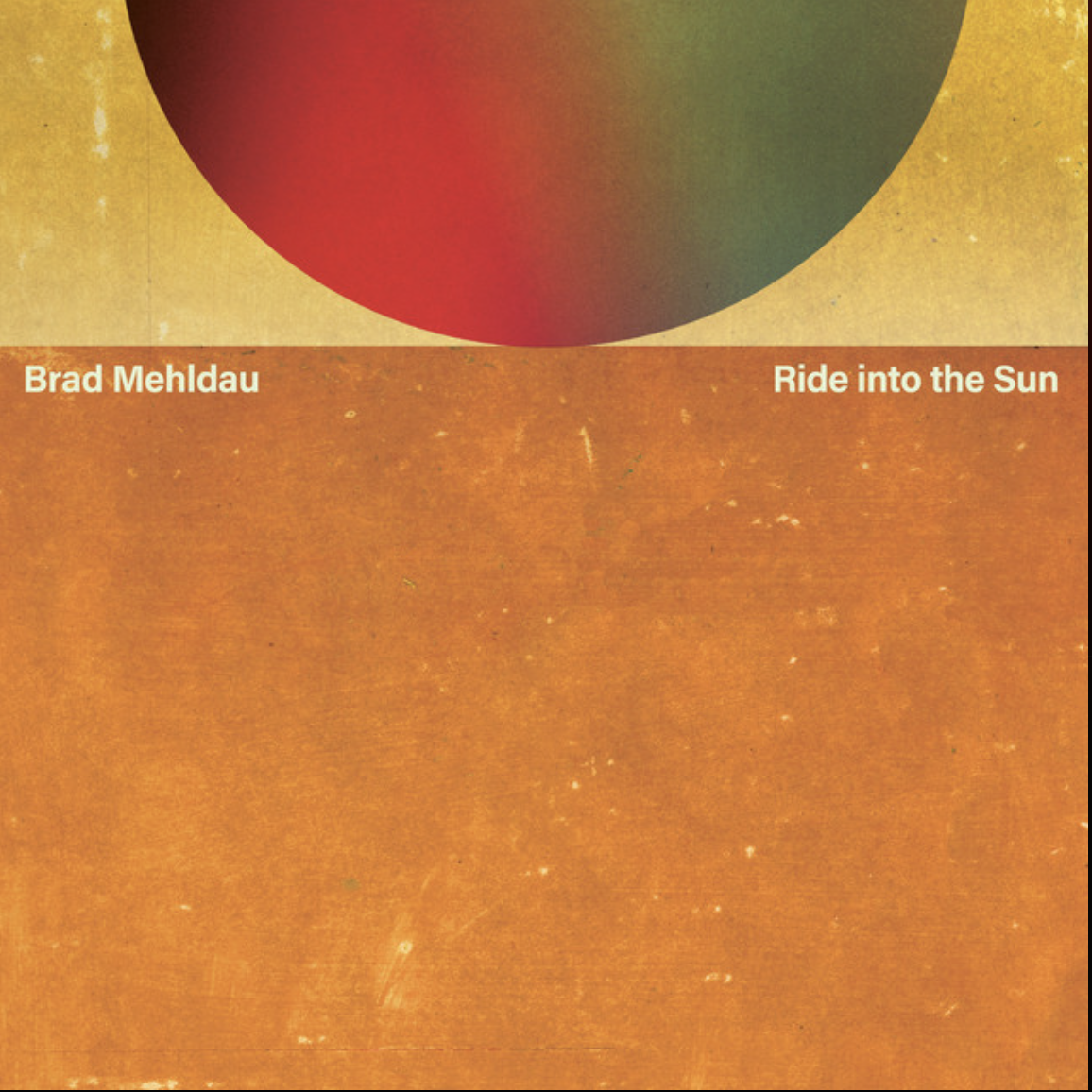



What I’m Listening To… ‘Ride into The Sun’ by Brad Mehldau
For a few months, I’ve been dipping into this album occasionally but only now have I given it the few deep listens it deserves. In this 2025 release from jazz pianist, composer and arranger Brad Mehldau, ten arranged songs from the singer /songwriter Elliott Smith serve as the core of the music—Mehldau’s own compositions and two versions of Nick Cave and Big Star complete the album.
Smith, who died aged 34 in 2003, was plagued by mental health problems. He played with Mehldau in the 1990s in Los Angeles and has earned a dedicated fanbase thanks to his accomplished songwriting. Mehldau calls him, in the liner notes, one of the “visionary depressives” which is as good a way as any to capture the beauty-in-pain aesthetic of his troubled lyrics.
The opening track hooked me when I first encountered it earlier this year. ‘Better Be Quiet Now’ takes the vocal line from Smith’s original song to craft a theme for piano that’s so floaty and poignant, so memorable, that you wonder why nobody has done this before. Drums and strings make an emphatic contribution, while Mehldau’s piano riffs on the theme, lending the music a grandeur the original didn’t aim for.
On ‘Everything Means Nothing to Me’, a solo piano opening leads into a mourning ballad with woodwind contributions. Mehldau’s orchestra, throughout the album, lends a chamber-like intimacy to these arrangements. Their contribution lifts the already promising material—for Smith could write the sort of tune that glues itself to your heart for days—and elevates it. As the ballad suddenly erupts into a Mardi Gras jazz band march, the music turns impulsive and improvised while breaking out into a room-filling burst of sound.
‘Tomorrow Tomorrow’, featuring Daniel Rossen has a scurrying guitar and hypnotic vocals while ‘Sweet Adeline’ has something undeniably Bach-like in Mehldau’s playing. One look back at his extensive list of albums and we are swiftly reminded of his 2018 album titled ‘After Bach’.
‘Sweet Adeline Fantasy’, which follows, is a Mehldau composition. There’s a strain of sadness running through this music, as there is throughout Smith’s oeuvre. Again, we hear Bach’s influence with what might be regarded as a modern-day chorale coming in towards the end.
In ‘Between the Bars’, a take on one of Smith’s most popular songs, Mehldau displays a feeling for the pulse of the music. This arrangement is more traditionally jazz-like than the others with Mehldau’s piano straying off into a very free solo based on the themes of the Smith song.
With ‘The White Lady Loves You More’ and ‘Ride into the Sun: Part 1’, hints of the opening track suggest that the album has been conceived as a suite of interlinked movements. This idea of unity and interconnection is also supported by the title of the final track “Ride into the Sun: Conclusion”.
Mehldau briefly leaves Smith world for a curious detour into the music of Big Star, an American power pop band. Their song ‘Thirteen’ shares some of that same American melancholy with Smith and Mehldau’s delicate arrangement is dreamy.
Next there’s a complementary pair: Smith’s ‘Everybody Cares, Everybody Understands’ and Mehldau’s response, the far more modest and restricted message ‘Somebody Cares, Somebody Understands’. Here there’s a more driving and Rock-like edge with backing vocals and vigorous guitars.
‘Southern Belle’ (with Daniel Rossen on vocals) opens like rodeo music. The original Smith composition is very pared down in comparison: just an acoustic guitar and Smith’s unvarnished vocals. In Mehldau’s version, the music is beefed up and taken in a new direction, which is sort of the point of an arrangement.
Other highlights include the first time I’ve heard a mandolin jazz solo in ‘Colorbars’ (with Chris Thile on mandolin and lead vocals) and ‘Sunday’, an instrumental piece by Nick Cave, with flute solo Alex Sopp. Although this is a new take on the Cave piece, it wasn’t as engaging in the absence of a vocal line to mimic.
And so we come to “Ride into the Sun: Conclusion”, over nine minutes of chamber-like textures and classical logic, although sometimes a bit scattered in its purpose and direction.
To dedicate almost an entire album to arrangements of his songs is the highest possible tribute to Smith. Fans of the singer will no doubt snap this up to encounter what is familiar music in a new guise, in the same way that I’ve gobbled up string quartet arrangements of Nirvana songs; for some unfathomable reason we seem to want to encounter the music we love in every way possible.
Following jazz tradition, Smith’s songs are treated as the standards of today, songs we look to, arrange, repeat and vary in the same manner that musicians have plundered the American songbook. This is an area where Mehldau excels—he’s given the same sensitive treatment to the Beatles and Radiohead and others before. There’s a classically-influenced clarity and control to his interpretations which, though favouring a clean vocal line, are still prone to jazzy excursions. This record is mournful, meticulously crafted and inspired—and, to my ears, one of the most interesting jazz albums of recent months.
Record Label: Nonesuch