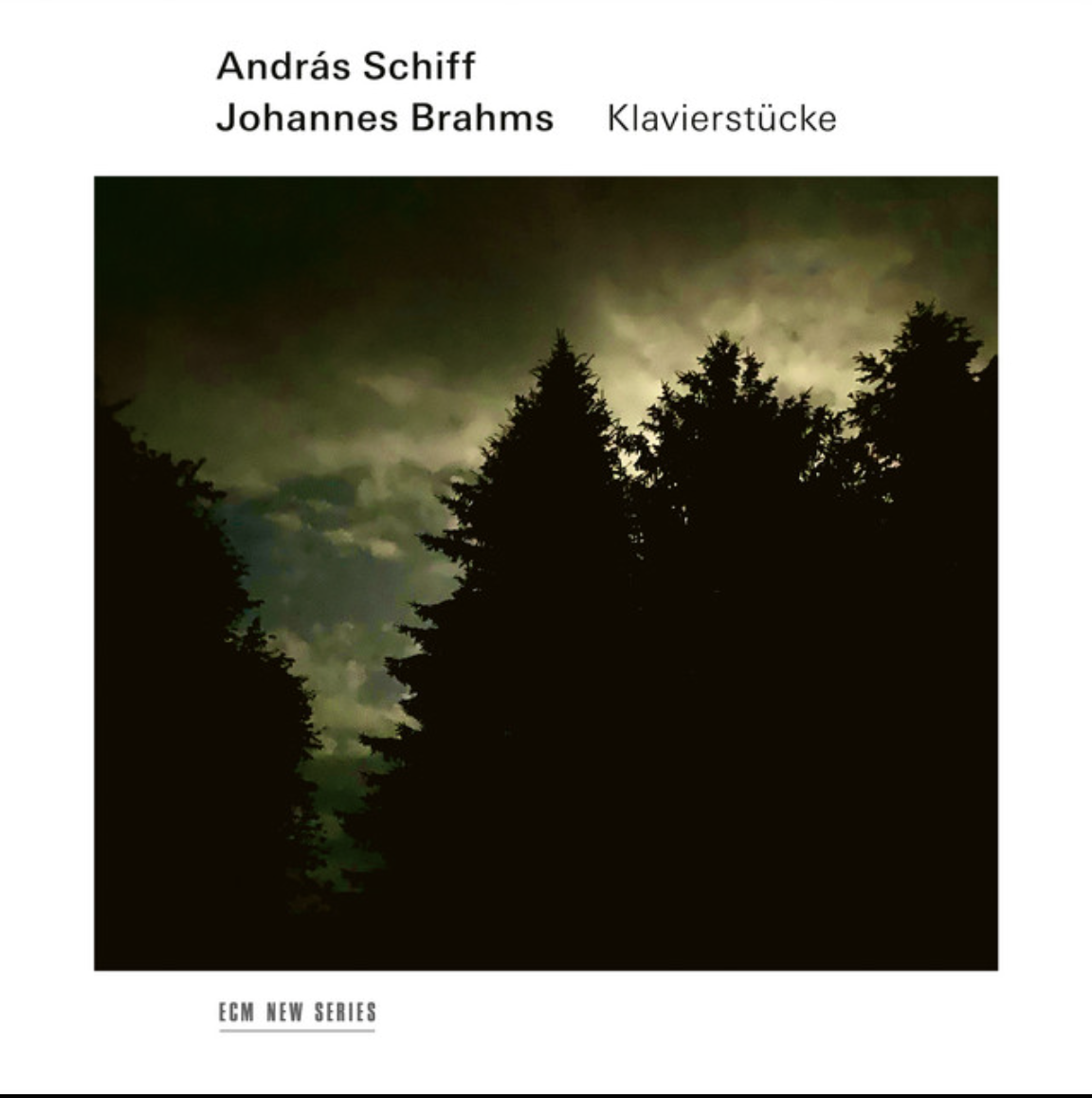



What I’m Listening To…Piano Pieces by Brahms, by András Schiff
The one word that crops up reliably when critics and fans want to describe the late chamber and piano music of Johannes Brahms (1833-1897) is ‘autumnal’. It’s hard to say what this really means: Brahms never wrote programmatic music and the short piano pieces, quintets and trios this tag is applied to do not have descriptive titles hinting at falling leaves or log fires and such. The seasonal adjective is best seen as a metaphor—it seeks to set the emotional mood of the music Brahms created in the later stages of his career: gone are the brawny themes and virtuosic pounding of his youth; instead we have highly compressed, subdued music, inhabiting a dappled world.
Although dating from 1878, the eight piano pieces that make up Op. 76 already hint towards this new emotional space that would flourish (or wilt!) with the four sets of piano pieces that make up Op. 116-9 from the 1892-3 period. The earlier set were the first solo piano works from the composer since the variations and waltzes of the 1860s and we can notice the shift in his compositional language. The use of titles like ‘Capriccio’ and ‘Intermezzo’ is another obvious link with the later works.
The eight pieces of Op. 76 are concentrated, brief masterpieces. Brahms exercises a tight control on emotional expression and there isn’t a single wasted note here; there are no extremes either, with the music’s power residing in shades and subtleties rather than overt display. Musical ideas come and go, with certain motifs presented in a desultory manner and almost forgotten until they re-emerge—transformed—a minute or two later. The listener has to pay attention to everything because, as with all of Brahms’ music, nothing is here by chance or carelessness. For a sample of the composer’s genius and judgment, try the last one of the set which is more outgoing than the previous pieces and ends on an exultant note.
Moving into the “autumnal” phase are the Seven Fantasias of Op 116. These are works to spend a lifetime with. I first encountered them about 25 years ago, having purchased Stephen Kovacevich’s wonderful set with Philips and spent many evenings letting the notes wash over me in a carpeted study in Watford, bare trees motionless outside my window. Laurence Wallach in his essay in the highly recommended The Compleat Brahms, edited by Leon Botstein, says the cycle is “held in balance by architectonic forces that retain an air of mystery, an atmosphere of the fragmentary and aphoristic.” He also perfectly describes the set’s contrast between “turbulence” and “lyrical serenity.”
The Op. 117 set of three Intermezzos is another gem. Sharing the same mood as lullabies, the tunes here are hidden, shy, hushed, and never stated cleanly and directly. Emotions only appear in a restrained fashion but this is never a case of repression or stifling—they’re there but, perhaps, age and time have buried them after the heat of youth. Op. 118 and Op. 119 continue in a similar vein: profound themes, song-like interludes, moments of resignation and tenderness. These are the unshowy emotional summits of the Romantic solo piano repertoire.
So what about András Schiff’s interpretation on this new album with ECM? A few summers ago, I listened to the Hungarian-British pianist analyse and then play all 32 Beethoven sonatas in a concert lecture series at the Wigmore Hall that’s available on Spotify. Schiff’s patient, scholarly and imaginative approach to these works made him the perfect guide, particularly for those ‘minor’ sonatas which are often overlooked. He made each Beethoven sonata an orchestral work in miniature, imagining trumpets and drums and flutes to flesh out his ideas. Apart from his musical knowledge, he is also an expert on the relevant biographical background and performance practices.
For this Brahms album, Schiff plays a Blüthner piano from the 1850s, the kind of piano Brahms himself favoured. Schiff used a similar instrument for his recordings of Brahms’ piano concertos, also available on ECM.
The respect paid to historically authentic performance practice has always inspired mixed feelings in me. On the one hand, it is fascinating to hear the music just as the composer himself would have heard it—Brahms was composing for and with this instrument, not with the Steinways of today. On the other, our ears are used to the more polished, rounder and full-bodied sound produced by modern instruments. The idea that we should replicate the performance conditions that were current when Brahms and others played these works in the 1890s, however, could set off more demands: should the pianist have the same hand dimensions as the bearded German? Should listeners sit down wearing period costume in a smoky room, fortified by a plate of pork knuckle and dark Bavarian beer? Anything contemporary, like the speakers or headphones we listen with, could distort the listening experience so that the work sounds different to how it struck late nineteenth century ears and minds.
There are two intuitions that I have in the historically informed performance debate: first, one should regard a score as a composer’s instructions for future performances and tolerate small changes to the conditions of these performances. Is it as much of a travesty of Beethoven’s work if we perform it on a piano built in 1980 as if we perform it on a synthesiser? The modern piano represents a modest change in sound profile; it is still very much within the same sound world and family of instruments as those used 100 years ago. Second, I have the strong intuition that a historically informed performance on authentic instruments must, above all, sound good. Too often have we been forced to clap along with the critics when a Romantic era symphony recording is released featuring an anaemic string section and harsh timpani. My ears just can’t get used to this leaner sound in much of the repertoire although many historically sensitive recordings have virtues like brisker tempos and a clarity of the musical line that I value and recognise.
In an enlightening video about these works, Schiff says that Brahms’s music “feels at home on this instrument”, (the full clip, well worth watching to understand Schiff’s intentions and choices, can be viewed here: https://tinyurl.com/2ndvymzb). The pianist explains the positive attributes of the Leipzig-built Blüthner piano. He says that, for these works, there is no need for the big sound of a modern concert grand for this is music that is best played and enjoyed in intimate settings at home.
And here lies the problem with some, but I stress, only some, of these pieces in Schiff’s hands. In the vigorous Capriccio in D minor Presto energico that opens the Op. 116 set, the piano just doesn’t create that big, rugged sound the music demands. This is not the subdued, autumnal Brahms sifting through falling leaves in his beard, but the memory of the lusty young man with flowing locks. In the more reflective pieces, Schiff cannot be faulted and his Blüthner delivers the lightest of tones and thereby avoids the “muddy” effect that performances of Brahms’ music can sometimes achieve when different musical lines are not easily discernible. There’s a precision to his playing with wouldn’t be out of place in Bach, a tribute, in a sense, to Brahms’ love of that composer.
Schiff continues to play judiciously through the other pieces, always at his best when storytelling in the lyrical interludes and particularly good at conveying the ethereal delicacy of some of the themes.
My only gripe other than the sound of the instrument in extremis is that some of his tempos seem a bit rushed if what we’re after is milking each theme for all it is worth. For example, he gets through Op. 118’s Intermezzo in A major, marked Andante teneramente, in just 4:38, compared with Murray Perahia’s 5.10, Radu Lupu’s 5:55, Stephen Hough’s 5:20 and Julius Katchen’s incredible 6:03. I feel these players plumb the depths more convincingly by slowing things down; Schiff’s approach will prove hard for me to get used to as many long-time listeners get overly attached to the interpretations they first grew to love on those initial explorations.
Schiff’s instrument choice and pacing are likely to annoy some traditionalists but I enjoyed this disc’s ability to bring to my attention the hidden strands of this music. To hear it coming from Schiff’s hands is to hear it anew, to launch into these reticent masterpieces with a new sense of love. We must be grateful that such intelligent interpreters are still revisiting such works.