
Memorial Service for the Admiral of the Fleet Sir Ben Bathurst

The press release italicised below was distributed by Royal Navy Media following the memorial service for the late Admiral of the Fleet Sir Ben Bathurst at St Margret’s Church, London, on 17 March 2026.
Memorial Service for Admiral of the Fleet Sir Benjamin Bathurst GCB
His Majesty The King led tributes to ‘the last Admiral of the Fleet’ whose life was celebrated at a memorial service in Westminster on 17 March 2026.
Cannon thundered in Portsmouth Harbour at the very moment silence descended upon St Margret’s Church in the grounds of Westminster Abbey as friends, family, senior military figures and dignitaries reflected on the life of Sir Benjamin Bathurst.
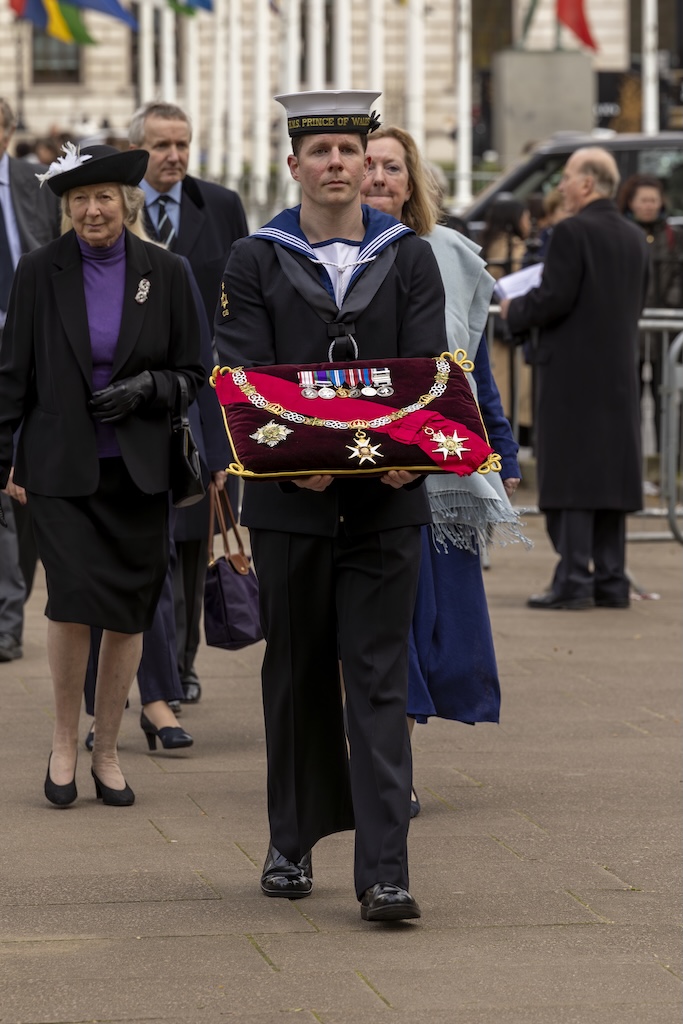
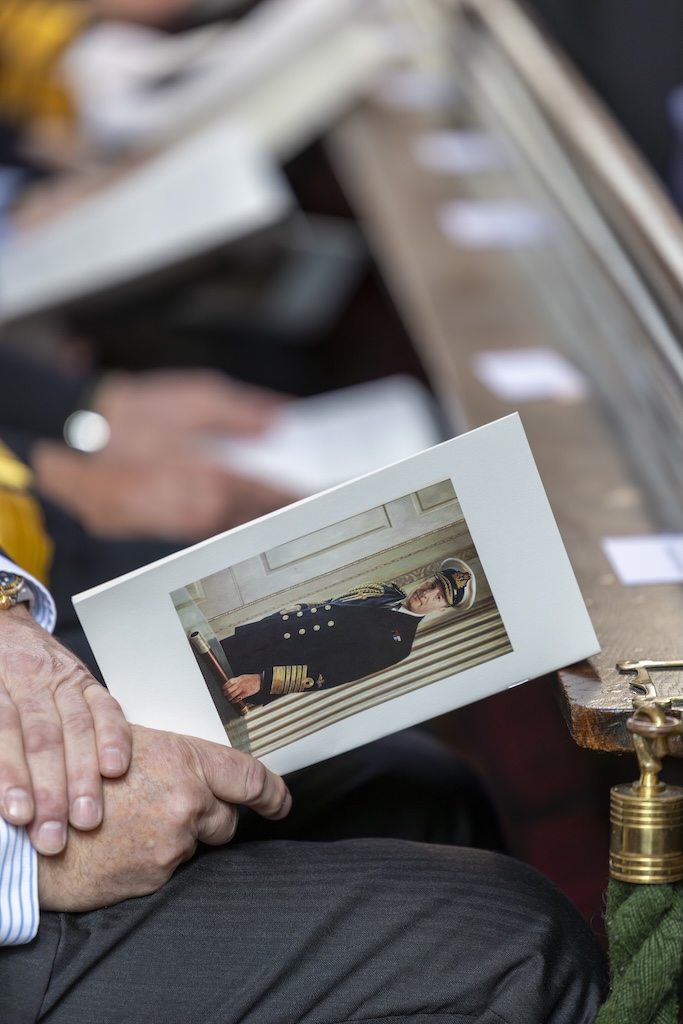
The nation’s military leaders – spanning most of the past four decades – representatives for His Majesty the King and the House of Windsor, and civic dignitaries celebrating the life and achievements of the former First Sea Lord who died in October last year at the age of 89.
In a career spanning five decades and bookended by war – the Suez Crisis at the beginning, conflict in the Balkans at the end – Sir Benjamin dedicated his life both to the Navy and Nation. The Congregation told of a multifaceted man – a first-rate military leader, Whitehall warrior, pilot, warship captain, loving family man, above all “a true gentleman” of warmth, compassion and insight.
That praise went all the way to the monarch who, as a junior officer just out of Dartmouth, was mentored by a then Commander Bathurst, Executive Officer of HMS Norfolk in the early 1970s.
In a letter read out at the service, King Charles described Sir Ben as “a wonderful man who drew the admiration of all he met.
“He had the rare gift of commanding respect from his subordinates, peers and superiors alike, whilst also remaining kind and approachable.
“He was a great man. He made a wonderfully powerful impact on his country, his shipmates and his family and friends.”
At sea, a young Benjamin Bathurst enjoyed a career as rich and varied as any junior officer could hope for: action in the Suez, experienced life beneath the waves in submarines HMS Sturdy and Talent, patrolled the waters of Cyprus during the ‘emergency’ of the late 1950s in a Ton-class minesweeper, and then switched to the Fleet Air Arm.
He spent the next 15 years as a helicopter pilot – including two years on exchange with the Royal Australian Navy – ultimately commanding 819 Naval Air Squadron. And he left a legacy which thrives today, setting the requirements for the Merlin helicopter which continues to play a key role on the front line supporting Commando and Fleet operations.
In the mid-1970s, he returned to the Surface Fleet commanding two Leander-class frigates. The 1980s were dominated by a series of staff appointments – both RN and Defence – ending the decade as Commander-in-Chief, Fleet, the second most senior post in the Service.
He took command of the Fleet at a time of tremendous political upheaval (fall of the Berlin Wall), social upheaval in the Navy (women going to sea) and renewed conflict in the Middle East (the first Gulf War).
After two years as Vice Chief of the Defence Staff at the beginning of the 1990s, Sir Benjamin headed the Royal Navy from 1993-95.
During his tenure, he successfully lobbied for the Submarine Service to be equipped with Tomahawk missiles – another legacy which persists today – and committed the Navy to peacekeeping operations in the Adriatic as Yugoslavia disintegrated in conflict.
When he left office in 1995, he was the last Royal Navy officer to be promoted to Admiral of the Fleet (a ‘five-star’ rank, equivalent to Field Marshal in the Army) and with his passing, only His Majesty the King holds the title.
In retirement, Sir Benjamin continued to serve: first as a Deputy Lieutenant and later Vice- Lord Lieutenant of Somerset, was a younger brother of Trinity House and a liveryman of the Guild of Air Pilots.
Honouring Sir Benjamin’s life and accomplishments, a 19-gun salute was fired in Portsmouth Naval Base as the service in London began.
The ceremony was attended by six former First Sea Lords, two field marshals, and more than a dozen military leaders of 2* rank or higher.
Vice Admiral Sir Tony Johnstone-Burt represented His Majesty The King, while Vice Admiral Sir Tim Laurence represented HRH The Princess Royal.
The service of thanksgiving was led by The Reverend Canon Dr James Hawkey and supported by The Reverend Dr Mark Davidson, Chaplain of the Fleet and The Venerable Ralph Barber, Archdeacon for the Royal Navy, with the tribute read by Vice Admiral Sir Charles Montgomery, Second Sea Lord between 2010 and 2012.
A Royal Marines Band brass quintet from CTCRM Lympstone and buglers from the Royal Marines School of Music provided the musical accompaniment to proceedings.




Latest News
- Clarification of Transitional Beach Arrangements for Accessibility Services
- Royal Gibraltar Regiment Holds Second Insight Weekend
- BabelBrain Research Project on the Rock Aims to Study Multilingual Practices
- Government And Unite Agree £24,413 Minimum Entry Salary For Public Service Staff
- East Side Project Exclusion Zone
- Gibraltar Joins Celebrations of Overseas Territories Day in Westminster
- GSD: "Concerns Over Availability of Accessibility Services and Lifeguard Services – Announcements Must Match Reality"
- Gibraltar Horticultural Society Launches “In Nature” Art & Photography Competition 2026
- GSD To Hold AGM On Thursday
- The Peter J Isola Foundation Donates Vehicle To Children’s Residential Services