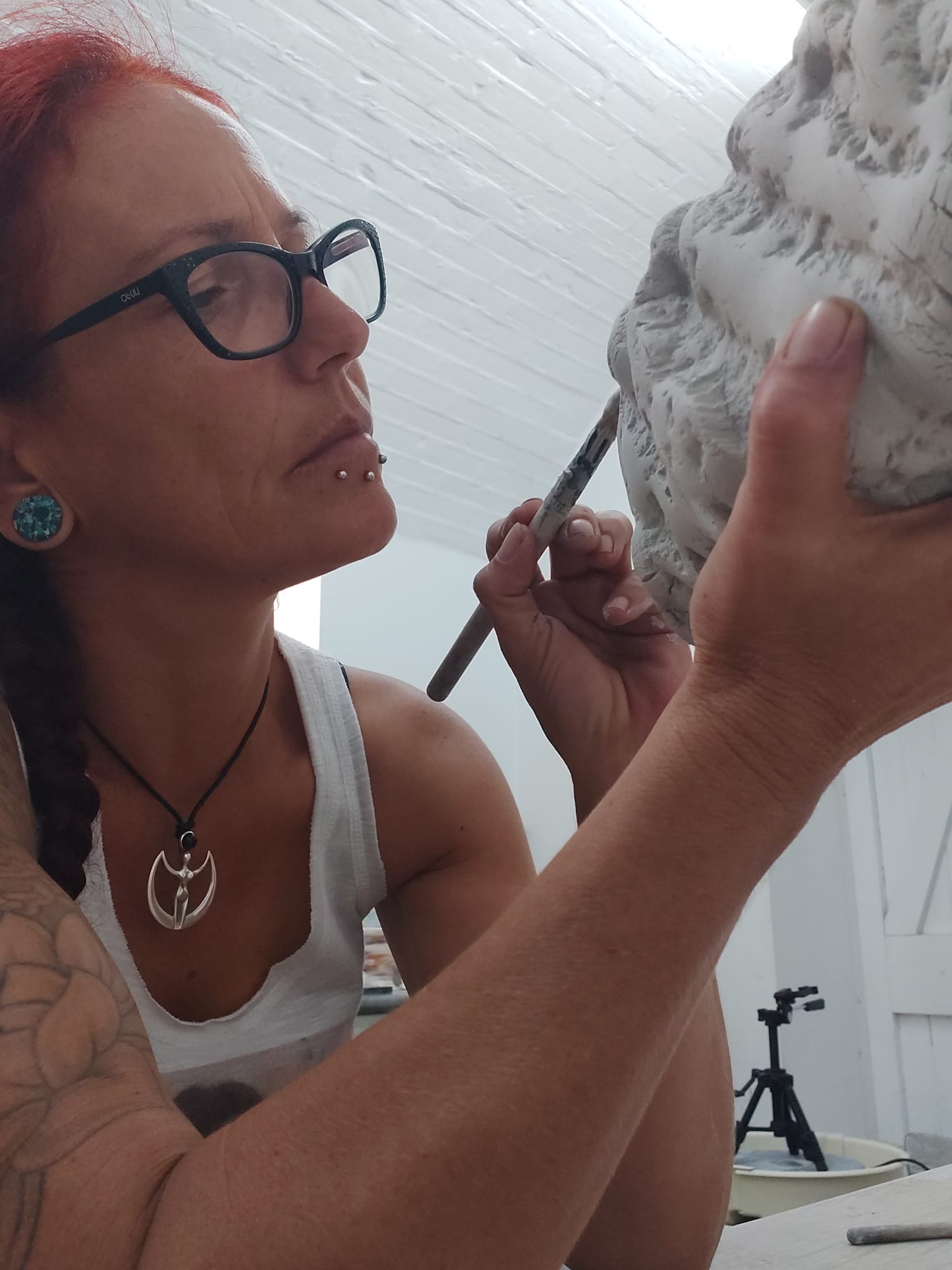



Getting Into Culture: Ceramic Art and Sculpture
We continue our new series where we ask artists, poets, novelists, musicians, dancers and others for tips to help beginners appreciate and learn more about their art form.
Today we speak to Ermelinda Duarte—a ceramicist / sculptor who studied at Bristol UWE and runs weekly classes at her studio—about how to learn more about and appreciate ceramic art and sculpture.
YGTV: What do you look for in a sculpture or a work of ceramic art? What makes it stand out?
Ermelinda Duarte: I look at the idea and the execution. Normally you are drawn to something that you haven’t seen before. Or, if you know more about the technical side of things, it might be a work that is technically difficult. When you come across something that isn’t usually seen on social media, you can tell the artist has been at it for years, time spent studying, experimenting, trying things out. The public can also have a negative reaction, which is good because it means that something stands out.
YGTV: What about those people who claim that they could easily produce a decent artwork?
Ermelinda Duarte: Everyone can have an opinion but art is something that people think they’re educated in. You can look at a ceramic piece in a gallery and think that you have the same at home, but you need to dig deeper. You can go to some lessons and you see how the process is different. What’s at home is mass-produced in factories that have the moulds, the stencils, it’s completely different. Once you’re inside the practice, it’s very different. People sometimes even believe that they can produce the same work as they see in a gallery. But it all goes deeper; once you understand, you see things differently.
YGTV: Should the title of the work of art influence how one interprets the work? Do you state your intention in an artwork?
Ermelinda Duarte: Sometimes, what’s more important than a title is the narrative or the study behind the work. Setting out the story behind a work is important as is the concept that is studied and how you’ve made it grow. Materials are important but it’s more about how you put everything together. I have a teapot piece that is titled “Breastfeeding”; the lid is a nipple and it also contains hand prints from my son and an umbilical cord. Maybe if I hadn’t used that title, you might still make the link but the title emphasises the mother’s connection with the child and there’s also the connection with the Spanish word “tetera”. When approaching an artwork compassion is also really important because you will be able to feel what’s being expressed even if you haven’t lived through what’s being shown in the artwork or what the artist has experienced.
It also depends on the piece—there are some that are quite straightforward and others that will make you think and ask ‘why?’ With some large pieces or installations you could even spend a whole day exploring. There is no need for you to be an artist to appreciate these things but you do need to be emotional, caring and sensitive.
Sometimes I do set out a brief of what I’ve tried to do but, in the end, the public come and see whatever they want. I also do a lot of collaborative work and collections where I structure everything for the public to be a part of it and I like that a lot. The time in history when the artwork was made is also important—you have to ask yourself: what was happening at that time?,
YGTV: Which top three artists in this field, in your opinion, should those who are curious about these art forms explore?
Ermelinda Duarte: They should check out Rachel Whiteread, Lucie Rie and Hans Coper—their work has broken loads of barriers. Andy Goldsworthy is also worth looking at as he’s my favourite artist…although I do different things to him, I do spend a lot of time outside in nature like him. He just uses whatever he has around him.