
Aug 20 - Remembering The Gibraltar AACR (R)evolution - On The Centenary Of Sir Joshua's Birth
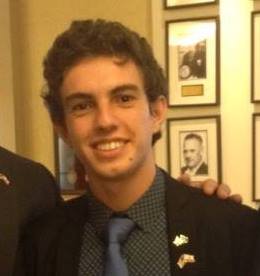 By Mark Eliot Montegriffo
No great social, political or economic change ultimately lies in the hands of a single person over a population; and nor should it ever. Progress is the result of a struggle that is taken up by an organised collective with shared values. Indeed, it is the collective and the individuals therein that deserve the highest praise in the fight against those who deny their rights; and the deniers thereof deserve the gravest criticism. Though we can point out key figures that were ahead of their time who impacted hearts and minds and gave the better part of their lives to fight the good fight. Gibraltar's political history is truly astonishing given the territory's size, but perhaps not so surprising given the strong-willed and cooperative Gibraltarian attitude.
Gibraltar is an autonomous democratic nation in all areas but foreign affairs. The autonomy that Gibraltar enjoys is perhaps as much to do with changing attitudes from British Governments since the end of the Second World War, adapting the Empire to the new Commonwealth, as with the achievements of successive Gibraltar city councils and governments. From the first democratic local election to the 2006 Constitution and beyond, Gibraltar has 'salami-sliced' (to paraphrase comments made by the current Chief Minister Fabian Picardo) her way to ever more self-governance. The path of Gibraltar's political development from the first half of the 20th Century to the start of the 21st Century is fascinating.
Despite this, the struggle of post-war Gibraltar and her protagonists risk being forgotten in the coming generations. The intention of this piece to pay homage to those involved in the AACR (Association for the Advancement of Civil Rights), trade and workers union members and figures from all other political parties and organisations that helped ensure a thriving political future for Gibraltarians. Without them, natives of Gibraltar would have still been treated as second class citizens by the colonialist military men with racist and sadist attitudes. Though, as Sir Joshua Hassan (leader of the AACR for three decades) would have probably said, the ultimate credit goes to the Gibraltarian people at large and its values and identity.
However, Sir Joshua Hassan was undoubtedly instrumental in the formation of Gibraltar's political identity and his party shaped the direction of its future. His political career took off with large thanks to Albert Risso. Risso was the brains behind the ideological framework of the AACR - rooted in trade unionism and the belief that the Gibraltarian civilian population, including its working-class, ought to govern the colony. This attitude brought about the Gibraltar City Council in 1921 which ended Governor-appointed (usually upper-class) individuals taking up roles in an unelected body in favour of the aforementioned ideal where an elected representative body of Gibraltarians would take part in a city council – but it was only the first step to meeting the demands for greater local representation (only male ratepayers could vote too, at a time when the vote in the UK was opened to men and women). Some 20 years later, Risso and Hassan formed the AACR. When it came to running as a political party, however, Risso humbly (and displaying an uncanny attribute of foresight) gave way as leader so that Hassan, the talented and young lawyer, could shine. And shine he did.

Hassan, known informally to some as “Salvador” (Spanish for “saviour”), is one of the most admired figures in Gibraltarian history for his political achievements for Gibraltar. On the 21st of August this year, we celebrate 100 years since his birth. Aurelius Peter Montegriffo (my grandfather), now going on 95 years of age, also served nearly 30 years in politics with the party and acted as Chief Minister when Salvador was representing Gibraltar internationally, either at the United Nations or perhaps at the Foreign Office. Montegriffo recognised his incredible political talent early; which he argues was responsible for the evolution of a Gibraltar Government. A former colleague of Hassan was quick to impress upon me that although the AACR was rooted in socialist principles, the advancement of civil rights was not done by a speedy revolution, but a steady and progressive evolution. This would have been unthinkable only some years before the 1964 Landsdowne Constitution which granted Gibraltar the capacity for the first ministerial Government. After all, the odds were highly stacked against the “plebians” or “natives”, especially when Gibraltar had a Governor that was less focused on the progression of civil rights and more focused on military matters.
Salvador's capability to manage relations with both Governors and officials from Britain and Spain spoke volumes for his skill in international diplomacy. Sir Peter Caruana, the second longest serving Chief Minister of Gibraltar said at the time of Salvador's death in 1997 that "no one has done more to establish and promote the identity and maintain the rights of the people of Gibraltar." The AACR under Hassan had achieved the aim of moving Gibraltar's political development in a way that it strengthened her relationship with Britain rather than under Britain, while keeping his ambition of returning to “normal relations with Spain”, especially during the closed border years and the end of the General Franco's dictatorship in Spain. By the end of 1982 when the border began to open again, Sir Joshua proclaimed that; “the people of Gibraltar are on the point of triumph over the forces that have tried to destroy them.” Historian and current Deputy Chief Minister Dr. Joseph Garcia wrote of Hassan that “his unrivalled political achievement stands as testimony to the trust and the confidence in which he was held by the Gibraltarians.” This is an apt way of remembering the longest serving Chief Minister in Gibraltar's history. Today, anybody with an interest in Gibraltar's politics, and even his detractors towards the end of his career, would be hard pressed to find that analysis questionable.
Indeed, parts of the current generation of Gibraltarians yearn for a similar attitude towards politics as that of Salvador. There is a feeling nowadays that politics is too adversarial or personal and the tribal attitude that it brings is counter-productive. The 1963 United Nations Committee of 24 meeting where Sir Joshua Hassan and Peter Isola, despite being political enemies at home, both so famously and expertly defended Gibraltar amid fierce pressure from Spanish delegates is an example of the kind of values that future generations of politicians in Gibraltar of all stripes should strive to maintain, whilst defending their own views and criticising the opposition's too. Granted, it's all about balance – but it requires open and meaningful discussion rather than opposing a view by default of it being the view of the opposite party.
Nevertheless, the AACR eventually disbanded towards the tail end of the 20th Century but it will remain forever relevant in the history and future of Gibraltar. Therefore, a great debt of gratitude is owed to all those who were part of the formation of the proud nation, and not least to Sir Joshua Hassan. For much of what we are and what we have - we owe it to Sir Joshua and the AACR movement.
A version of this article appeared on the New Statesman website and in today’s Gibraltar Chronicle.
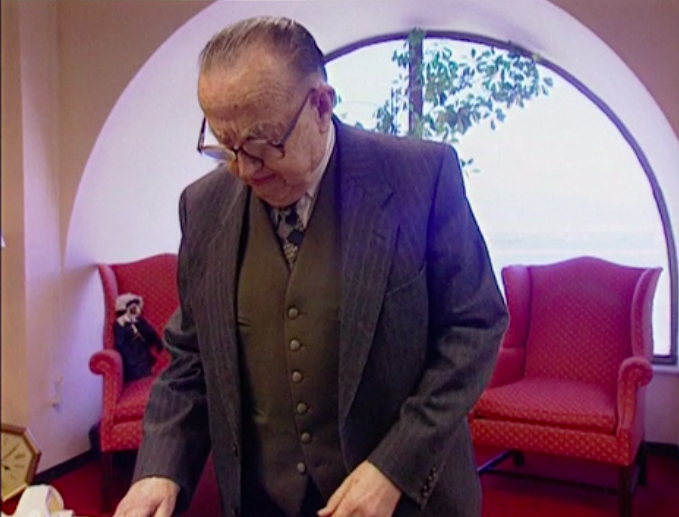
(Pictures are screenshots of a specially commissioned video presentation which can be viewed on our Facebook page)
{fcomment}





Latest News
- GCS Summer Activities For Adults In July
- GCS Summer Workshops And Activities For Young People
- Summer Sports And Leisure Programme 2026
- GSD Grants Daniel Feetham Life Membership At AGM
- Extra Bathing Water Sampling As A Precaution
- ARRISE Donates £5,000 To CareLink Baby Bank
- Gibraltar Parliament – 5th Commons and Overseas Territories Speakers' Conference
- Minister Santos Congratulates Special Olympics Gibraltar Bowling Team on Success in Switzerland
- Mini Libraries At the Beaches
- St Joseph’s Upper Primary Supports 5in5 Through Resilience Week Fundraiser