
Haydn’s Stabat Mater - A Moving Performance at the Cathedral of the Holy Trinity

By Giordano Durante
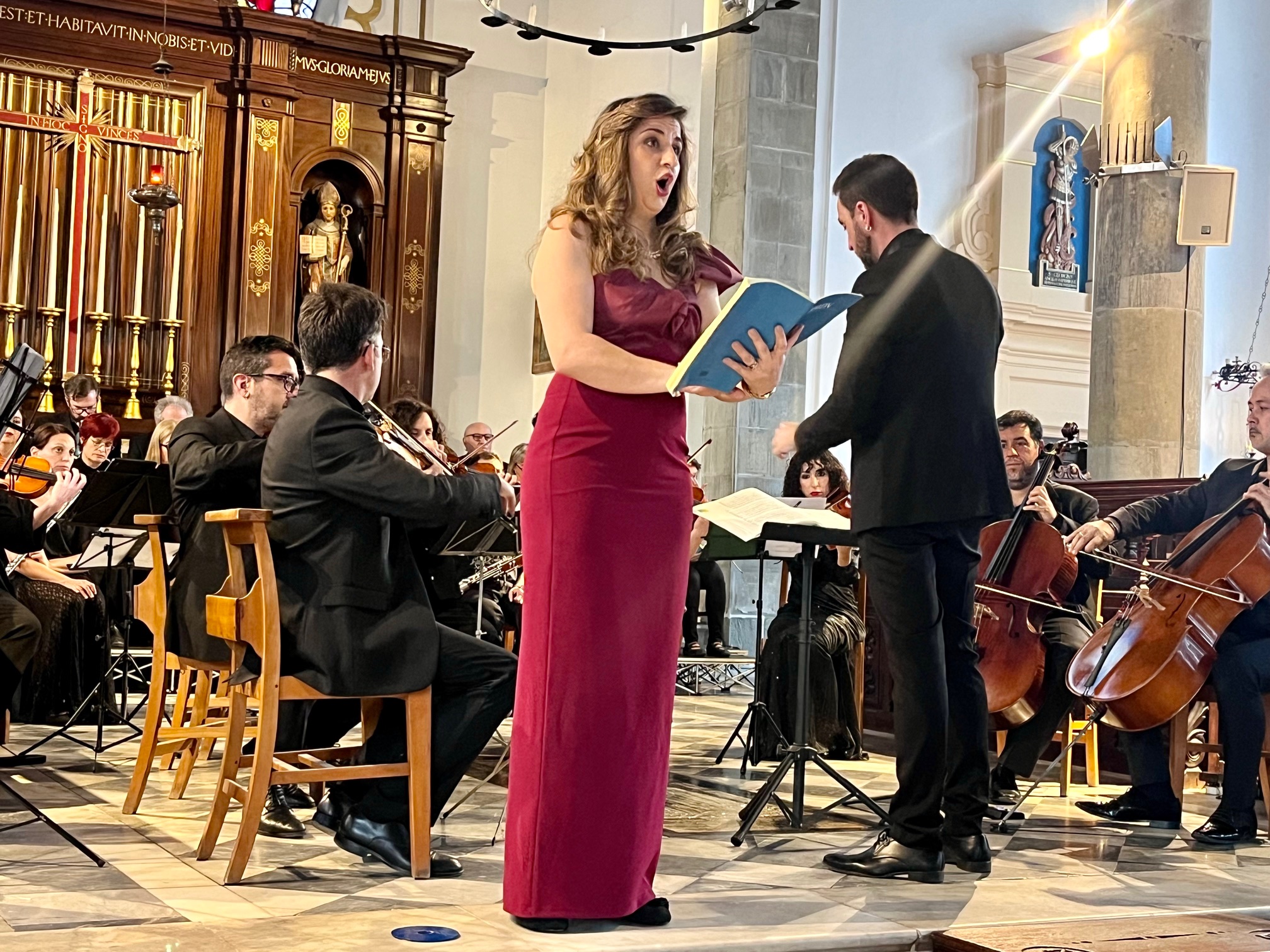
A spiritually moving performance of Joseph Haydn’s Stabat Mater took place yesterday evening at the Cathedral of the Holy Trinity. Hosted by the Gibraltar Classical Music Society, musicians included conductor Michele Paccagnella, the InCantus choir, five soloists and a small orchestra.
The Stabat Mater is a 13th Century poem-hymn of unknown provenance which depicts the Virgin Mary’s suffering during her son Jesus Christ’s crucifixion. The twenty stanzas of the Latin text have since been set to music by many composers and the work heard last night was Haydn’s first large-scale choral composition, paving the way for later masterpieces like his Masses and The Creation.
Opening with a solemn and sorrowful orchestral introduction, an approach also followed by Czech composer Antonín Dvořák a century later, the first section was sung by tenor Phillip Borge McCarthy, his lines echoed by the chorus. His rendition was imbued with feeling, a successful attempt to convey the deep pain of a mother witnessing the death of her son.
Alto Anthony Roper De Almeida then launched into ‘O quam tristis et afflicta’ (O how sad and stricken), hitting all the right high notes. Although the orchestra adopted a more stately tone for this stanza, I was again struck by the emotional investment of the performers.
In ‘Quis est homo qui non fleret’ (Who is the person who would not weep), for chorus, the declamatory opening line immersed us in the stark power of this 800 year old text, a text characterised by strangeness and yet possessing a universal appeal regardless of faith. The lines urge us to identify with a grieving mother, to see her pain not only as a crutch and catalyst for our own faith but also as a call to a less specific compassion for the human condition itself.
I was pleased to see soprano Tessa Pitto Duarte take the stage next for a confident, characterful account of ‘Quis non posset contristári’ (Who would not be able to be saddened). In recent performances this local soprano’s fine voice has formed part of the choir so it was compelling to hear it in full flight and given a much deserved spotlight.
Bass Jose Antonio Ariza Rodriguez impressed too with his resonant tone in the next section, highlighting Haydn’s deft use of dramatic and stylistic contrasts. In this and the next section (sung by Phillip), we could note the operatic qualities of Haydn’s writing for the soloists, an approach that highlights vocal virtuosity with numerous flourishes. In Phillip’s ‘Vidit sum’, the moving sequence for low strings really emphasised the tenderness of the text and his closing line ‘dum emísit spíritum’ (while he sent forth [his] spirit) hit a chilling note.
Also leaving her habitual place within the choir was soprano Samantha Bowling who joined Phillip for ‘Sancta Mater’ (Holy Mother), another operatic passage, a standout performance from both singers displaying a sharing of the weighty emotional content as the words spoke of ‘your wounded son.’
In Anthony’s next solo ‘Fac me tecum’ (Make me cry with you), it was clear that Paccagnella’s approach was to adopt sensible tempos throughout and to encourage a subtle interpretation from his orchestra. Although it remains a work where the vocal forces are prominent, it was often enlightening to focus on the instrumentalists too and witness the care they brought to the performance.
One of the highlights was the exultant quartet of ‘Virgo vírginum præclára’ (Noble Virgin of virgins) for bass, tenor, alto and soprano (Samantha) with the usually subdued orchestra rising to fill the cathedral with sound. For the first time, it felt like we were listening to a large-scale work, a feeling of growth and momentum which drove the performance towards its fugal finale and its closing, rising ‘Amen’, the music following the text from the death on the cross to paradise.
This uplifting performance, clearly the result of many hours of rehearsals, saw the soloists and supporting choir in fine fettle. It helped that there was no interval so that the progression of the poem—and Haydn’s sensitive setting of it—could develop in an uninterrupted manner. The informative programme, with full poem, translation and musical analysis, prompted us to think about the extent to which a musical setting, and a particular performance, might ‘suit’ a text. A performance like yesterday’s can only serve to add a deeper emotional understanding to these lines about suffering, compassion and empathetic identification whose force remains undimmed through the centuries.




Latest News
- “Code-Switching Is A Skill, Not A Deficit” Says BabelBrain Principal Investigator
- Gibraltar Citizen’s Advice Bureau Celebrate Volunteer’s Week
- Gemma Arias-Vasquez Announces GSLP Leadership Bid With Feetham’s Support
- Entries Open For ‘Our Gibraltar’ National Celebrations Competition
- SSAFA Gibraltar To Host Charity Concert At St Michael’s Cave
- Clarification of Transitional Beach Arrangements for Accessibility Services
- Royal Gibraltar Regiment Holds Second Insight Weekend
- BabelBrain Research Project on the Rock Aims to Study Multilingual Practices
- Government And Unite Agree £24,413 Minimum Entry Salary For Public Service Staff
- East Side Project Exclusion Zone