
Jul 27 - Deputy Chief Minister: Cooperation And Dialogue, Not Confrontation And Vetoes
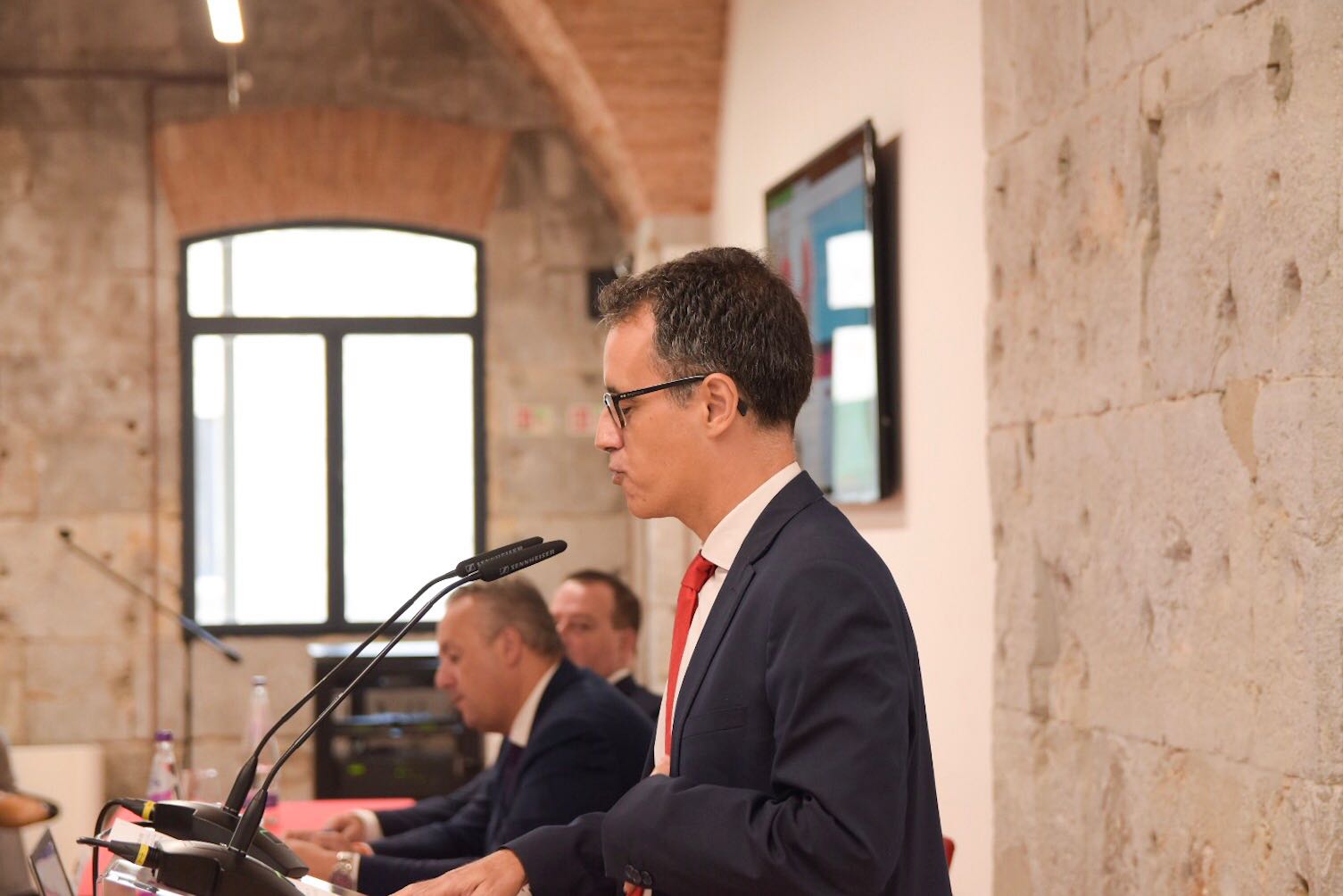
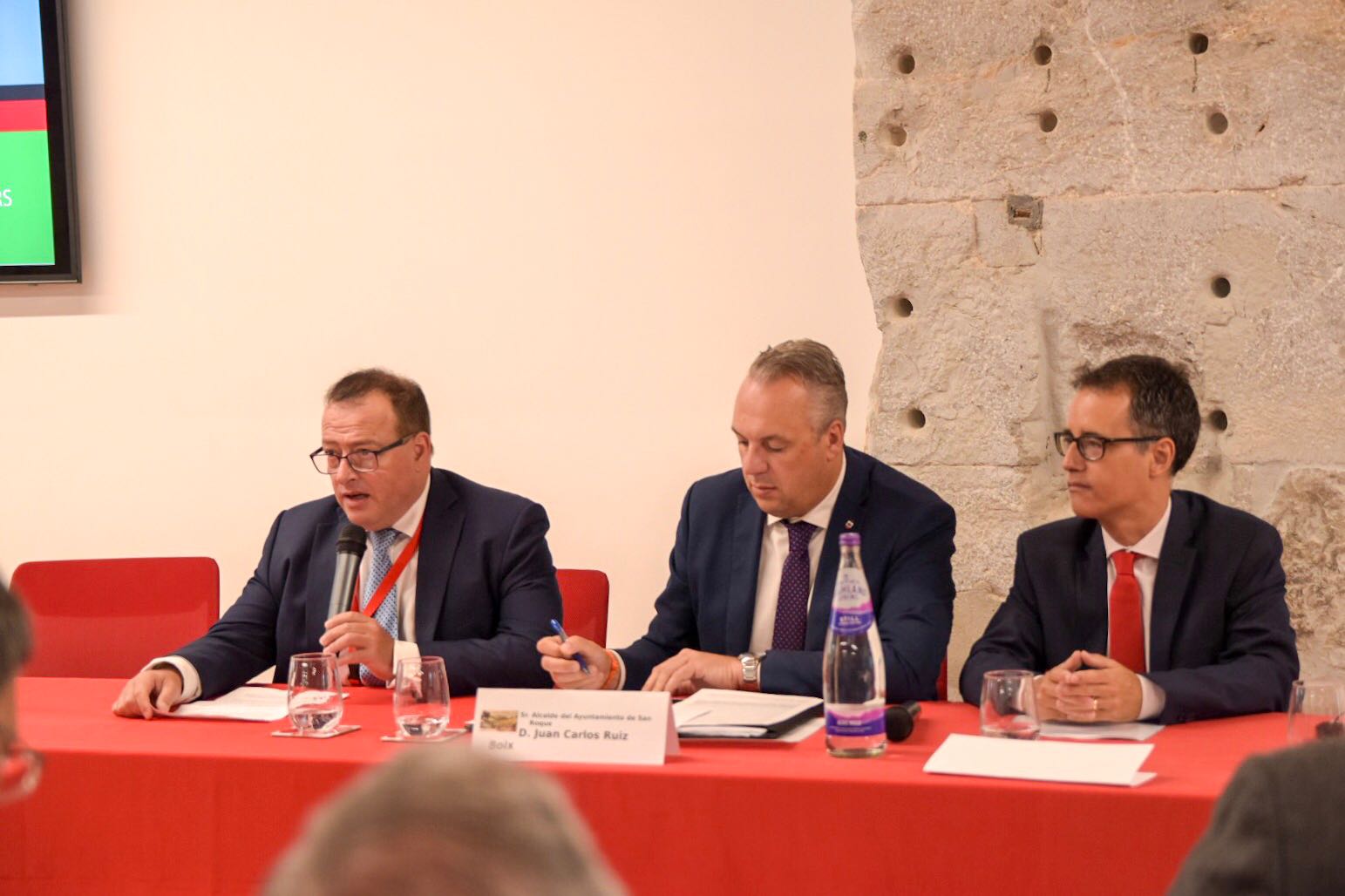
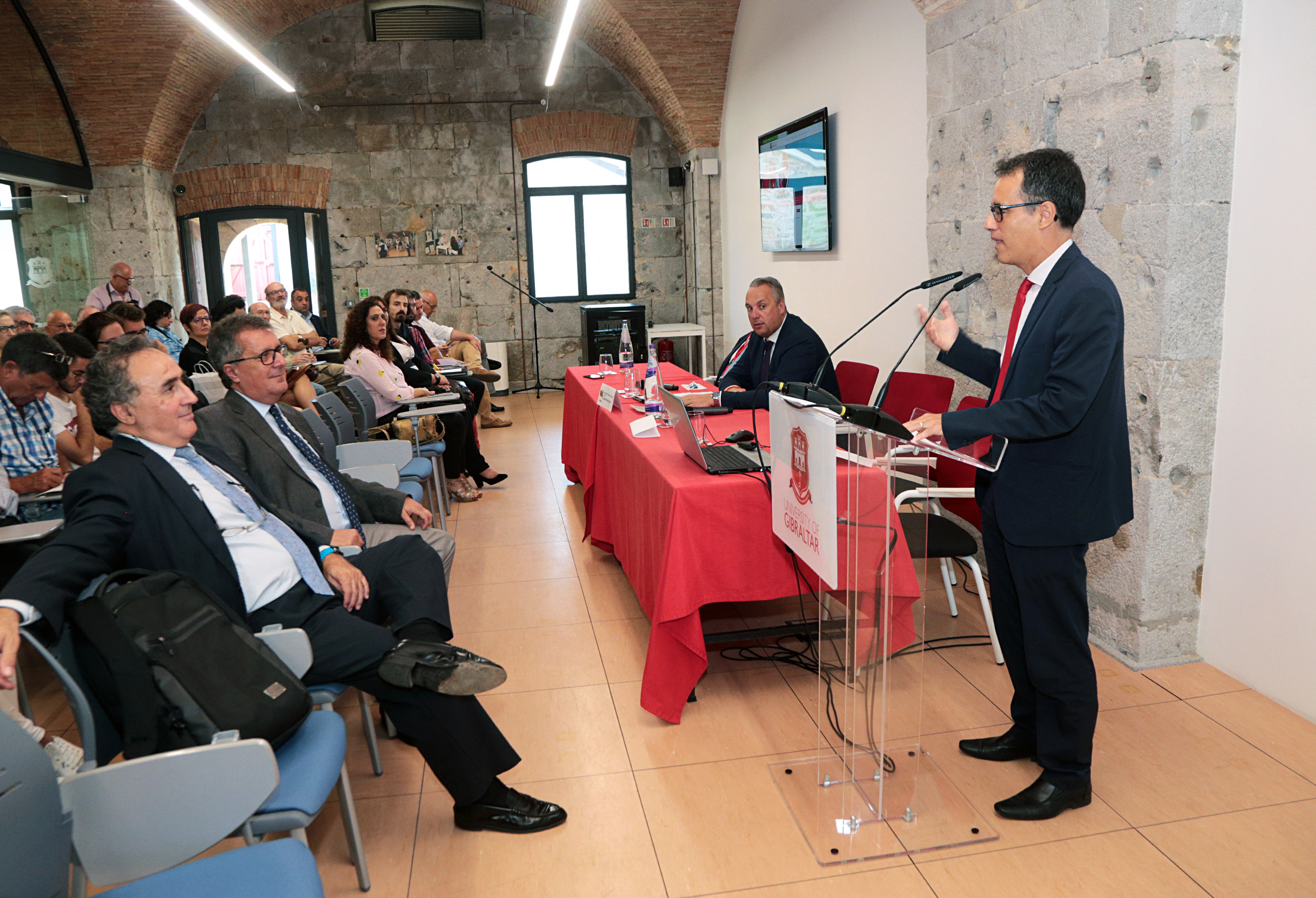 The Deputy Chief Minister Dr Joseph Garcia spoke about ‘Gibraltar and Brexit’ during a Cursos de Verano session of the University of Cadiz hosted by the University of Gibraltar this morning.
Here’s the full text of his speech:
Good morning,
This is the third time that the University of Gibraltar has hosted sessions of the annual Cursos de Verano of the University of Cadiz in San Roque.
The third, already, since the United Kingdom’s referendum on continued membership of the European Union.
They say that time flies when you are having fun!
I would prefer to say that time flies, full stop.
And we really are approaching crunch time in this historic process.
It is a pleasure for me to welcome you all to Gibraltar today on behalf of the Government.
Welcome in particular to our distinguished guests.
I am Dr. Joseph Garcia, the Deputy Chief Minister of Gibraltar and also the Minister responsible for Brexit.
The Chief Minister has asked me to apologise on his behalf for not being able to be here today but I trust that you all found his intervention yesterday interesting and insightful.
I am basing this talk on the contribution I made recently here during the history lecture series.
Today, as we approach the end of our membership of the European Union, I want to take you all back to the beginning.
Like the famous Chinese philosopher Confucius once said, us historians believe that we must study the past in order to define the future.
And that philosophy can be applied to the situation that Gibraltar the UK, the EU and indeed Spain, find themselves in today.
As we get ready for EU exit it is ironic that a lot can be learnt from the politics that guided our entry, and the UK and Spain’s entry, to the EU.
So let us start at the beginning.
Our history in the EU opens when the United Kingdom joined what were then the European Communities on 1 January 1973.
This was 15 years after the European Economic Community was established with the signing of the Treaty of Rome in 1957.
It did not take the United Kingdom 15 years to decide to join.
It was more a case of third time lucky.
Many forget that two United Kingdom applications to join the EC were vetoed in 1963 and again in 1967 by the then President of France, Charles de Gaulle.
When doing so, he said that Britain was “incompatible” with Europe.
He said that Britain harboured a “deep-seated hostility” to any pan-European project.
Perhaps time has shown that he was not wrong.
If only he had been paid attention to back then!
Be that as it may, as I said, on 1 January 1973 the UK joined the club.
Gibraltar joined the club too.
 We did so through Article 227(4) of the Treaty of Rome.
This stated that its provisions “…shall apply to the European territories for whose external relations a Member State is responsible”.
Through what is now Article 355(3) of the Treaty on the Functioning of the European Union, Gibraltar is the only one of the UK Overseas Territories that is largely a part of the EU.
The application of the Treaties to Gibraltar is subject to certain exemptions.
These exemptions are the following:
Gibraltar is outside the Common Agricultural Policy;
Gibraltar is outside the Common Fisheries Policy;
Gibraltar applies no VAT; and
Gibraltar is also excluded from the Customs Union.
It is on this basis, that customs checks are conducted on the importation and exportation of goods by authorities on either side of the border.
In Brussels we are often asked the question, how did we achieve this unique status and why did we want it?
The reasons for this are two-fold.
First of all it is important to recall that when the United Kingdom and Gibraltar joined the EC in 1973 Spain was still ruled by General Franco.
Many of you will remember that the border between Gibraltar and Spain was physically closed.
Indeed, next year we will mark 50 years of that closure.
There were no overland trade routes between Gibraltar and Europe then.
Not being in the Customs Union therefore allowed Gibraltar to maintain its historic status as a Free Port.
Our accession was negotiated as a purely technical question rather than as a divisive political issue.
Spain was not yet in the club.
There was a genuine willingness to find solutions.
Solutions with no political strings attached.
What this demonstrates to me is that, with good faith, political will and in the absence of diplomatic contamination, technical solutions can, very effectively, be applied to cater for Gibraltar and indeed the Campo’s unique and specific circumstances.
And this is why I said earlier that the lessons of the past can and should inspire attitudes towards the future.
Aside from the exemptions I have already mentioned, Gibraltar, as you know, does not form part of the Schengen Area.
The United Kingdom opted out of the Schengen Agreement.
It is on this basis that Spanish border guards conduct border controls on entry to Spain from Gibraltar and exit to Gibraltar from Spain.
Given what I have just said, the theme of the discussions today, revolving around Gibraltar being an external border of the EU post-Brexit is in itself thought-provoking.
Because in fact the border between Gibraltar and Spain is already an external border for the purposes of the movement of goods and it is already an external border for the purposes of the movement of people to and from the Schengen Area.
Therefore the default position at the frontier of no Brexit deal between the UK and the EU is precisely the Schengen Border Code that is in place today.
Spain’s accession to the club in 1986 changed the dynamic of Gibraltar’s relationship with Europe.
It brought about important consequences.
First of all, if Spain had to comply with EC rules on the freedom of movement of people.
The frontier gates opened.
They did so in February 1985.
Gibraltar, at the time, advanced EC rights to Spaniards even before Spain joined the EC.
We asked for nothing in return then.
The result was that thousands of Spanish frontier workers were again able to take up positions in Gibraltar as they had done prior to the closure of the border.
We saw the value of treating each other’s citizens with respect for the benefit of better social, cultural and indeed economic cooperation.
Brexit has reversed the roles.
Spain is staying and Gibraltar is leaving.
As I said Gibraltar advanced EC rights as a goodwill gesture.
Yet conversely, for a similar arrangement, not that long ago, Mr. Margallo was already asking for half our sovereignty!
Historians always have the advantage of hindsight.
It is easy to look back.
And in retrospect, the United Kingdom too laid out the EU welcome mat to Spain.
The UK was then in a position of strength.
London could have insisted that all restrictions against Gibraltar be lifted unconditionally as the price of Spanish entry.
But Mrs Thatcher opted not to use her veto against Spain.
This was a card that the UK could have played in the same manner that Mr de Gaulle played it against Britain in 1963 and in 1967.
The UK did not do it.
Therefore both Gibraltar and the UK made important goodwill gestures at the time of Spain’s accession.
Yet Spain was not grateful.
Instead of allowing Europe to dissolve the issue of Gibraltar, certain Spanish Governments adopted a policy of seeking to actively exclude Gibraltar from Europe.
They also sought to use the European framework as a mechanism to advance their claim.
For example, as a result of Spanish lobbying, Gibraltar Airport was suspended from all aviation measures from 1987 until 2006.
In 2004 the Forum for Dialogue on Gibraltar had been established.
In 2006, the then Spanish Socialist Government formally agreed with the then United Kingdom and Gibraltar Governments that it would no longer seek the suspension of Gibraltar Airport from EU civil aviation measures.
In exchange, Gibraltar agreed to construct a new air terminal parallel to the frontier fence with direct access to another building on the Spanish side.
Gibraltar kept to its part of the bargain.
A new air terminal was built next to the border at a cost of over £80 million to the Gibraltar taxpayer.
There was no EU funding for this project as had been hinted at one point.
The terminal opened at the end of 2011.
Unfortunately, the Government in Spain changed as the terminal became operational.
The new Partido Popular Government reversed the policy of their Socialist predecessors and moved from a policy of cooperation with Gibraltar to a policy of outright confrontation.
Confrontation benefits nobody.
It does nothing to benefit citizens on both sides of the frontier.
And the result remains evident for all of us to see.
Madrid withdrew from the Forum for Dialogue.
There is still no access to the new terminal from the Spanish side.
Madrid abandoned the Cordoba Agreement.
Both the Gibraltar Government and the UK Government have stuck to the agreement.
This included UK taxpayers paying millions of pounds to Spanish pensioners.
Gibraltar implemented the aviation aspects of the Cordoba Agreement and direct flights to Madrid commenced.
But imagine the benefits which could have been reaped on either side of the border if the airport were allowed to operate as a fully-fledged European airport serving the business and tourism needs of hundreds of thousands of people.
Imagine if, like Malaga Airport, Gibraltar Airport developed new routes to places like Barcelona, Berlin, Rome and Paris.
Imagine if, Gibraltar Airport, were able to demand more car hire services, more logistics, catering, ground handling and security services.
Imagine the jobs that this would create.
The increased shared prosperity that would flow from all this.
Imagine if politicians in Madrid were able to put their sovereignty claim to one side in favour of genuine cooperation and economic prosperity.
On this side of the border we stand ready to cooperate to turn all this from a dream into a reality.
I should add that this Spanish aviation veto did not only affect Gibraltar and the Campo area.
It has had consequences for Europe as a whole.
A number of aviation measures are still held up for the whole of the EU.
This includes proposals to recast the Single European Sky;
to advance air passenger rights;
to allocate slots at airports; and
aviation agreements with third countries.
Billions have been lost.
And the EU has done precious little to apply EU law.
However, the border has indeed seen EU intervention in a way that the Airport has not.
Some of you might recall that the former Prime Minister, David Cameron, urged the then President of the Commission, Jose Manuel Barroso, to put an end to the border crisis of 2013.
Mr Margallo was foreign minister of Spain at the time.
As a result, the European Commission sent three inspection visits to the border in 2013, 2014 and 2015.
We argued that those delays were politically motivated.
 They followed intensive controls by the Spanish authorities.
Thousands of people were made to queue up for hours every day.
Many of them were Spanish nationals.
Others were EU nationals.
Some were Gibraltarians.
Those delays had an impact on the lives of people in Gibraltar.
However, many simply chose not to go to Spain and stayed at home.
You could not get a table at any restaurant in Gibraltar during weekends.
Yet I submit that for many thousands of Spanish and EU nationals the impact of those delays was even worse.
Because they had to cross the border to get to work and then to get back home again.
They had no choice.
Restaurants, shops and hotels in Spain felt the economic impact of Gibraltarians spending their money at home.
It took a while, but the Commission eventually agreed with Gibraltar that the checks which created the lengthiest delays were “disproportionate”.
The situation at the border improved as a result of their intervention.
It is still far from perfect but it is better than it was in 2013.
So that covers, very briefly, the period that we have been in the European Union.
What should we expect when we are out?
There are a little under 3 months to go until the critical October European Council.
This is where the UK-EU Withdrawal Agreement is expected to be finalised.
We are therefore around 8 months away from our anticipated departure from the EU.
The European Union and the United Kingdom are both making preparations for a no-deal Brexit.
96% of us did not want Brexit in the first place.
But despite the decision to leave, the government has taken decisive action.
We have led with ambition, persistence and determination with a defined message and a clear set of objectives.
A set of objectives which would allow Gibraltar’s economy to continue to flourish and would not have a detrimental effect on economic and social interaction with the Campo region.
We have held over five hundred Brexit meetings since the referendum.
This is not meeting for the sake of it.
Those meetings have produced results.
Important areas of our economy have been ring-fenced.
We know what we need to achieve to make Brexit work.
One of the key components of that strategy involves the maintenance of a fluid border.
This is important to residents on both sides.
It is important to tourists.
It is important to businesses.
It is also important to frontier workers.
Approximately 50% of Gibraltar’s workforce are cross-frontier workers.
These figures are published.
The fact is not a secret.
The vast majority are Spanish nationals but every EU nationality is represented.
You might not be surprised to hear that there are over 8,000 Spanish frontier workers and that there are over 2,500 Brits who live in Spain and work in Gibraltar.
But you may be surprised to hear that there are also 2,400 EU citizens from every single Member State represented here in Gibraltar.
We have the European Union of Frontier Workers right here in our 6.8 square kilometres!
The border is not only important to cross frontier workers but also to Gibraltarians and to the 10 million tourists who visit us each year.
Fortunately, the Spanish rhetoric with regard to the border has changed dramatically over the last 24 months.
We have gone from Sr. Margallo’s threat that post-Brexit it would be “perfectly possible” to close the border;
to Sr. Dastis’ indications that the border “won’t suffer too many changes”;
and to Sr. Sanchez’s comments in March when he stated that fluidity at the border was “fundamental”.
The political will therefore seems to be there.
We believe in the language of cooperation and dialogue as opposed to the language of confrontation and vetos.
But we will have no hesitation in defending our interests and in defending our sovereignty.
There are legal solutions which exist which could secure the smooth passage of persons and goods across the border even in a post-Brexit world.
We have worked hard on different options.
And we will continue to do so.
We have found solutions in the past.
We can do so for the future as well.
Thank you.
{fcomment}





Latest News
- GCS Summer Activities For Adults In July
- GCS Summer Workshops And Activities For Young People
- Summer Sports And Leisure Programme 2026
- GSD Grants Daniel Feetham Life Membership At AGM
- Extra Bathing Water Sampling As A Precaution
- ARRISE Donates £5,000 To CareLink Baby Bank
- Gibraltar Parliament – 5th Commons and Overseas Territories Speakers' Conference
- Minister Santos Congratulates Special Olympics Gibraltar Bowling Team on Success in Switzerland
- Mini Libraries At the Beaches
- St Joseph’s Upper Primary Supports 5in5 Through Resilience Week Fundraiser